

Spartacus Blog
Technofeudalism: Is AI going to destroy Capitalism and Democracy?
In 1936 a 28-year-old politician was chosen to become the Democratic candidate for Texas's 10th congressional district. He was given the names of the wealthy men who lived in that area who might fund his campaign. This included members of the Suite 8F Group, a collection of right-wing businessmen based in Texas. The name comes from the room in the Lamar Hotel in Houston where they held their meetings. (1)
At first, they rejected the idea of giving him money when the man admitted to being a supporter of Franklin D. Roosevelt and his New Deal policies. These men held conservative views and considered Roosevelt was a "socialist" or "communist". The young man explained that the New Deal was good for capitalism because it gave out government contracts. After he was elected, he would ensure that his financial backers would receive some of these lucrative government contracts. The men agreed and it began a long successful relationship between this politician and these wealthy businessmen in Texas. (2)
Brown and Root were one of the companies that was willing to give money to this ambitious politician. In return he helped the company get the New Deal project, the Marshall Ford Dam. George Brown, a senior figure in the company wrote to this man on May 2, 1939, "I hope you know… how I feel reference to what you have done for me and I am going to try to show my appreciation through the years to come with actions rather than words if I can find out when and where I can return at least a portion of the favours." (3)
That young man's name was Lyndon Baines Johnson. He was one of the first politicians to realise the importance of government contracts if companies were to be successful. At the time the law prohibited corporate campaign contributions. It was many years later before the journalist Drew Pearson, who was given leaked tax records, to show how Brown and Root used people they employed to give money to Johnson. (4)
By the time Lyndon Johnson became president in 1963, members of Suite 8F Group were incredibly wealthy. However, this was only the start of the process because they were all beneficiaries of the Vietnam War. He told the chairman of the Joint Chiefs of Staff, General Maxwell D. Taylor, and the other chiefs of staff at a Christmas Eve party in 1963: "Just let me get elected, and then you can have your war". (5)
The Vietnam War was the first time in history civilian contractors "assumed a major construction role in an active theatre of operations". The company that provided this was Brown and Root (now known as Halliburton). The deal done with the American government gave them revenues of more than $380 million. (6)
Technology and Capitalism
One of the problems of capitalism is that competition reduces profits. Manufactures are forced to compete for consumers by price and quality. This has a major impact on profit margins. Since the emergence of capitalism in the 18th century, successful businessmen have tried to achieve a monopoly so they can increase their profit margins. Richard Arkwright, the first textile millionaire (he was worth over £200 million in today's money), attempted to get a monopoly by using the patent system and controlling the world's cotton production. (7)
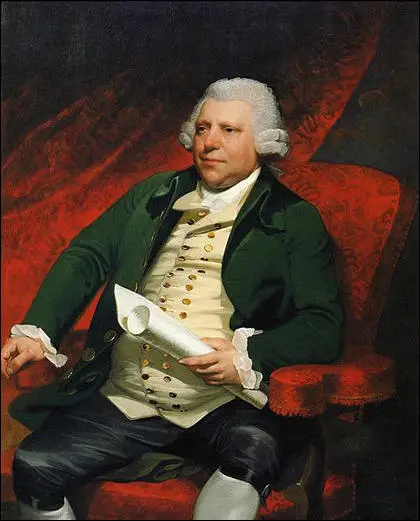
Although the Industrial Revolution had a detrimental impact on some jobs, for example, handloom weavers, it created even more employment in other sectors of the economy. Textile manufacturers needed improved transport systems to deliver their goods to their customers. At first it was road and canal building but eventually the UK developed an efficient railway system. These developments created some well-paid jobs such as engineers, and by the beginning of the 20th century the UK had full-employment and high average-wages. Henry Ford's invention of the assembly line in 1913 had a similar impact when it reduced the time taken to make a car from 12.5 hours to 1.5 hours. Speed lowered production costs and forecourt prices, increasing demand, sales and the number of staff hired to fulfil them. It also led to high-wages and a massive increase in economic growth (8)
In the 1960s new technologies began to change the nature of work. Industrialists started to use robots to help manufacture cars. The first industrial robot system was introduced in New Jersey, on a General Motors assembly line in 1961. The robot system in question was called Unimate and was invented in the early 1950s by George Devol. (9)
John Maynard Keynes and Technology
The impact on the overall economy was not immediate. Workers were not completely replaced by robots. In the 1970s politicians began quoting the words of the economist John Maynard Keynes who in 1930, predicted in an article entitled Economic Possibilities for our Grandchildren that by 2030 technological change and productivity improvements would eventually lead to a 15-hour workweek. Keynes's reasoning was that by producing more with less, all our needs would be met through less work, freeing up more time for leisure. (10)
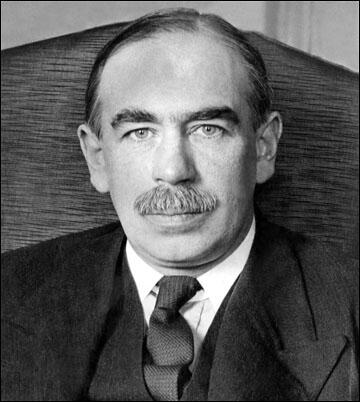
Keynes assumed that governments would protect its citizens from the harmful impact of technological change, and they would ensure the fair distribution of the benefits from improved productivity. However, the data and research since Keynes's time reveals that companies have kept most of the benefits for themselves. That of course how capitalism works. One study published in August 2025 reported that the bosses of Britain's largest listed companies took home record-high pay packets for the third successive year. The report found that the average FTSE 100 chief executive is now paid 122 times the salary of the average full-time UK worker. The median pay of an FTSE chief executive has risen to £4.58m in the last financial year, up from £4.29m the year before, an increase of nearly 7%, according to analysis by the High Pay Centre. (11)
Technology and Privatisation
In the 1980s the situation in the UK got worse. Combined with the changes in technology Margaret Thatcher's anti-trade union legislation made it more difficult for industrial workers to maintain their standard of living as their wages struggled to keep up with inflation. Thatcher's government also raised interest rates to 17% and brought in tough public spending curbs. The steep hike harmed the manufacturing industry and exports but had the desired effect of reducing wage demands. Unemployment in 1982 rose above three million for the first time since 1930s, meaning one in eight people were out of work. Shoppers were also suffering after a decade of rising food prices, with a basket of goods going from £9.40 in 1972 to £35 in 1982. Thatcher's method of getting inflation under control was successful, with levels falling to below five per cent in the mid-1980s, but it came at the cost of pushing unemployment even further to beyond 4 million. (12)
Governments in the past have taken action to prevent the development of monopolies. This changed in the 1980s when Margaret Thatcher government sold off some of our publicly owned industries to private companies. As a result of this development, prices have gone up, and the quality of the service has gone down. As a recent report pointed out: "As a consequence of privatisation, UK consumers and workers have suffered from increasing energy prices, fuel poverty and thousands of job losses. Between the early 1990s and 2001, 60 per cent of jobs in the energy sector were lost to efficiency gains, involving outsourcing and downsizing. Meanwhile, private firms are recording ever-growing profits." (13)
Internet and Monopolies
With the emergence of the internet, it became easier to develop monopolies. For example, Google controls virtually all online advertising. When it first started it divided the revenue it was receiving fairly between Google and the owner of the website where the advertising appeared. At the same time, it bought up any other company that came into the marketplace. Once it got a virtual monopoly in online advertising, it increased the cost of advertising for its customers whereas it reduced the money it gave to the online publisher. This is why newspapers such as The Guardian cannot make a profit out of its online operation without asking for donations. (14)
The increased costs of online advertising have resulted in increased prices of goods for the consumer. According to the Competition and Markets Authority (CMA) Google uses anti-competitive practices to dominate the market for online advertising technology. The CMA has warned this "potentially unlawful behaviour could be harming thousands of UK publishers and advertisers." The CMA points out that most businesses use Google's services when placing digital ads on websites. It accuses Google of preventing rivals from "competing on a level playing field" with its own tech for the billions of pounds spent by UK businesses on online advertising. (15)
Amazon controls a dominant share of cloud servers through its Amazon Web Services (AWS) division, which provides computing, storage, and networking resources to a large portion of the internet. AWS manages the physical infrastructure and provides customers with virtual environments like Amazon VPC to run their applications, offering tools for managing and securing these resources. The system failed on 20 October 2025 and took out major social media platforms like Snapchat and Reddit, banks like Lloyds and Halifax, and games like Roblox and Fortnite. AWS has positioned itself as the backbone of the internet. (16)
AI Billionaires and the Struggle for Power
Billionaires are busy fighting each other to get control over the AI industry. Forbes Magazine reported in October 2025 that billionaires in the United States are currently heavily investing in this new technology. It reported that "It's been a big year for AI infrastructure deals. In just the last month, OpenAI, Oracle, Nvidia, AMD and others have announced epic transactions worth hundreds of billions of dollars… Thanks in large part to the big deals, valuations are skyrocketing, and the billionaire founders, executives and investors tied to the massive AI data centre buildout have benefited the most. By Forbes' count, 20 of the most notable billionaires tied to the explosive growth in AI infrastructure spending have already added more than $450 billion to their fortunes since January." This $450 billion is based on share values. The biggest gainer by percentage of net worth is cloud computing firm CoreWeave with its shares are up 250% since March, nearly tripling the net worths of its four billionaire cofounders (Michael Intrator, Brian Venturo, Brannin McBee and Peter Salanki) and early investor Jack Cogen. To finance its infrastructure buildouts as quickly as possible, CoreWeave is over $29 billion in debt. (17)
One of the main AI success stories is Palantir Technologies, which has seen stunning 165% gain for the year so far. Stan Choe has argued: "Companies across the U.S. stock market will need to hit expectations for growth in profit to justify the big gains for their stock prices since April. Criticism has been rising that the broad U.S. market, and AI stocks in particular, have become too expensive and could be inflating into a dangerous bubble similar to the 2000 dot-com bust." (18)
Standard & Poor's 500 is a stock market index that tracks the performance of the largest publicly traded companies in the United States. It is considered a primary gauge of the overall U.S. stock market and a key indicator of the American economy because it represents approximately 80% of the total market capitalization of U.S. stocks. According to market analyst, Carolane de Palmas: "During the current bull market, which has now lasted over three years, the S&P 500 has gained roughly 90%, while the technology sector has surged by 186%. That outperformance has reshaped the index's composition: technology now represents around 36% of the S&P 500 - its highest concentration since the dot-com era. Including AI-heavy firms like Alphabet, Amazon, Tesla, and Meta, the sector's influence rises to nearly half of the entire index's market capitalization. Such dominance means the health of Wall Street increasingly depends on whether these high-growth giants can justify their valuations." (19)
The Wall Street brokerage Citigroup in September uprated its forecast for spending on AI datacentres by the end of the decade to $2.8tn – more than the entire annual economic outputs of Canada, Italy or Brazil. With nearly $2bn a week in new venture capital investment pouring into generative AI in the first half of 2025, the pressure to realise profits will quickly rise. The fear is that profit maximisation in the age of AGI could result in far greater adverse consequences. "Google is reported to be planning a $6bn centre in India and is investing £1bn in an AI datacentre just north of London. Even a relatively modest Google AI factory planned in Essex is expected to emit the equivalent carbon footprint of 500 short-haul flights a week." (20)
A large amount of money is being spent on large language models (LLMs). These are computer programs designed to understand, process, and generate human language. They work by learning patterns from vast amounts of text data to predict the probability of word sequences, enabling them to perform tasks like translation, summarization, and conversation. This includes Grok (Elon Musk), Gemini (Google), CoPilot (Microsoft), ChatGPT (OpenAI), Meta AI (Facebook) and Claude (Dario Amodei). China have their own LLMs called DeepSeek.
Sundar Pichai, the head of Google's parent firm Alphabet, admitted recently there was some "irrationality" in the current AI boom. Alphabet shares have doubled in value in seven months to $3.5tn (£2.7tn) as markets have grown more confident in the search giant's ability to fend off the threat from ChatGPT owner OpenAI. As valuations rise, some analysts have expressed scepticism about a complicated web of $1.4tn of deals being done around OpenAI, which is expected to have revenues this year of less than one thousandth of the planned investment. (21)
These share prices pose a serious threat to the US economy. The incredible dependence of US stock market growth on the performance of a handful of tech giants. The Magnificent 7 - Alphabet, Amazon, Apple, Meta, Microsoft, Nvidia, and Tesla - collectively comprise one third of the valuation of America's entire S&P 500. The value of the shares in these companies have helped cushion the US economy from the impact of trade wars, and kept retirement plans and investments buoyant. (22)
Palantir Technologies
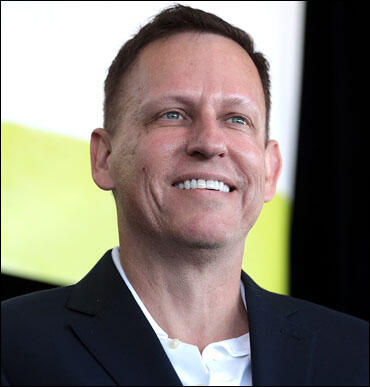
Whether this investment in AI is successful depends largely on achieving government contracts or some other form of monopoly. This is something that Palantir Technologies has been very good at in the past. It was established by Peter Thiel in May 2003. He originally made his fortune by establishing PayPal with Elon Musk. Thiel stated that the idea for the company was based on the realization that "the approaches that PayPal had used to fight fraud could be extended into other contexts, like fighting terrorism". He also stated that, after the September 11 attacks, the debate in the United States was "will we have more security with less privacy or less security with more privacy?". (23)
Peter Thiel holds extreme right-wing views and is a passionate supporter of Donald Trump. He explained his political philosophy in an article entitled, The Education of a Libertarian: "I remain committed to the faith of my teenage years: to authentic human freedom as a precondition for the highest good. I stand against confiscatory taxes, totalitarian collectives, and the ideology of the inevitability of the death of every individual. For all these reasons, I still call myself ‘libertarian.' But I must confess that over the last two decades, I have changed radically on the question of how to achieve these goals. Most importantly, I no longer believe that freedom and democracy are compatible." (24)
An early investor in Palantir was the Central Intelligence Agency through its In-Q-Tel Venture Fund. The CIA is now one of its major customers, along with the National Security Agency, the Federal Bureau of Investigation, the United States Immigration and Customs Enforcement (ICE), along with other U.S. counterterrorism and military agencies. "Palantir has become the go-to company for mining massive data sets for intelligence and law enforcement applications, with a slick software interface and coders who parachute into clients' headquarters to customize its programs. Palantir turns messy swamps of information into intuitively visualized maps, histograms and link charts. Give its so-called ‘forward-deployed engineers' a few days to crawl, tag and integrate every scrap of a customer's data, and Palantir can elucidate problems as disparate as terrorism, disaster response and human trafficking." (25)
The co-founder of Palantir was Alex Karp. In a recent interview Karp said that his company was "the most important software company in America and therefore in the world". AR has argued that "Palantir is also the scariest company in the world, what with its involvement in the Trump administration's authoritarian agenda. The potential end point of Palantir's tech is an all-powerful government system amalgamating citizens' tax records, biometric data and other personal information – the ultimate state surveillance tool. No wonder Palantir has been likened to George Orwell's Big Brother, or Skynet from the Terminator movies." (26)
The American Civil Liberties Union analyst Jay Stanley is very critical of Palantir's software: "Palantir operates behind the veil… To what extent are they doing the government's bidding? To what extent are they doing their own?" With the CIA and the National Security Agency beset by leaks and hackers, he worries that private companies like Palantir could be "used as a way to launder activities for which the government wants to avoid public scrutiny. At the end of the day, Palantir is a for-profit company, and there's an opportunity for abuse." Stanley has noted that deploying Palantir's software could be "anything between a good, efficient use of government resources and a true totalitarian nightmare, monitoring the activities of innocent Americans on a mass scale." (27)
Palantir's founding mission was "defending the west" at a time when early 2000s Silicon Valley was all about giving tech a consumer-friendly face. While the likes of Google, Apple, Facebook and Microsoft shied away from working with the military, Palantir embraced the prospect, arguing that Silicon Valley should be helping the US to maintain its edge over threats from countries including China, Iran and, latterly, Russia. (28)
In 2013 and 2014, a Palantir Technologies employee in London worked with data analytics firm Cambridge Analytica to create an app that would harvest the personal data of more than 50m Facebook users, with the aim of influencing American voters. When the scandal broke years later, Palantir blamed an employee "engaged in an entirely personal capacity" and said it would take "appropriate action". This was contradicted by the Cambridge Analytica whistleblower Christopher Wylie, who told British MPs: "There were senior Palantir employees that were also working on the Facebook data." (29)
Michael Steinberger, who has recently published a book on Palantir has pointed out: "They (Palantir) don't collect the data, they don't store the data; they provide software that helps companies and organisations make better use of their own data… If abuses of data are taking place with Palantir software, it's not because Palantir is doing it, it's because the clients are doing it. I think of Palantir software as like a toaster. If you burn your toast, you don't blame the toaster." (30)
Palantir Technologies is guaranteed success because of its government contacts both in the US and the UK. In 2020 Palantir won a contract with the NHS to ensure critical medical equipment is available to the facilities most in need during the coronavirus outbreak. The contract was valued at more than £23.5 million. It announced that firms would create computer dashboard screens to show the spread of the virus and the healthcare system's ability to deal with it. These will draw on data gathered via 111 calls and Covid-19 test results. (31)
The awarding of this contract sparked a backlash, including a lawsuit from legal campaign group Foxglove which alleged the contract had been a stitch-up. "No to Palantir in Our NHS", a campaign backed by Foxglove and dozens of other advocacy groups, warned the public: "Palantir is a US tech and security corporation with a terrible track record. They help governments, intelligence agencies, and border forces to spy on innocent citizens and target minorities and the poor. We don't trust them with our health data, and we don't trust them to respect the values of our NHS." (32)
This contract was several years in the making. In 2015 Palantir met twice with Matt Hancock, then a junior Cabinet Office minister, who would go on to become health secretary overseeing the NHS pandemic response. "Not long after those meetings, Palantir won its first public UK government contract - with the Cabinet Office. Government transparency records indicate that Palantir employees met with UK ministers and senior officials almost 90 times over a 10-year period, a figure that seems likely to be an underestimate. The Guardian recently reported on leaked documents that reveal Johnson and chief aide Dominic Cummings had met Thiel in August 2019, an encounter never officially disclosed via the Number 10 meeting log, for reasons that remain unclear." (33)
Palantir developed a good working relationship with the Conservative government. In 2022, Palantir recruited NHS England's former artificial intelligence chief, Indra Joshi. Palantir's UK head, Louis Mosley, grandson of the late British Union of Fascists leader Oswald Mosley, was quoted as saying that Palantir's strategy for entry into the British health industry was to "Buy our way in" by acquiring smaller rival companies with existing relationships with the NHS in order to "take a lot of ground and take down a lot of political resistance". (34)
In November 2023, NHS England awarded Palantir a £330 million contract to create and manage the Federated Data Platform. As Mark Wilding has pointed out: "NHS patient data, spanning more than seven decades and covering most of the UK population, is a trove of potential medical and demographic insights that may be unrivalled anywhere in the world. Opponents of the FDP contract have questioned whether private companies can be trusted with such sensitive personal data and whether it could be used to develop profitable products that benefit Palantir shareholders rather than the British taxpayer." (35)
As the left-wing Labour MP Jon Tricket pointed out: "As British capitalism moved into its neoliberal phase, the state moved from being a provider of public services into being a purchaser of services drawn from the private sector. We have now reached the end phase of this process. In the first phase, the state acted like a customer of services drawn from a market of providers. Now, however, the state is tending to stand back so that entire public services are handed out, often to friends and colleagues of government ministers." (36)
Trickett wrote his article about how Palantir obtained this contract during a Conservative administration, but he did not suspect that this would continue under a Labour government. In September 2025, Keir Starmer and the US government signed the "Tech Prosperity Deal," which includes a £150 billion investment from US firms. It is claimed that the deal will create jobs, advance AI, nuclear, and quantum computing research, and foster joint initiatives between UK and US research institutions. (37)
Tech Prosperity Deal
Professor Richard Whittle has argued: "Headline announcements include a £10 billion commitment from private equity firm Blackstone supporting an AI growth zone in the north-east of England; Palantir to invest up to £1.5 billion to help make the UK a defence innovation leader, a £22 billion commitment from Microsoft (with half of this for capital expenditure for AI and cloud services); and an £11 billion injection into the UK economy from chip maker Nvidia. Further announcements include CoreWeave (a data centre company) investing £1.5 billion in UK data centre sites, software firm Salesforce investing £1.4 billion in the UK; Google's parent company Alphabet investing £5 billion in AI; and further investment from Nvidia in UK AI startups. A record-breaking £150 billion of investment has been announced in total. All of this is also expected to bring forward billions of pounds of investment into nuclear energy to power this tech explosion." (38)
The UK's technology secretary Liz Kendall has said the deal did not include guarantees on scrapping a tax for big tech or on copyright for AI companies. But on the other hand, is this the same as guaranteeing the tax won't be scrapped or watered down? The Trump administration has argued that the UK's new Online Safety Act (which obliges tech companies to protect users from harmful content) and its digital services tax erode free speech rights and unfairly target American tech giants. One of the critics of the Tech Prosperity Deal is Nick Clegg, a former executive at Facebook parent company Meta, has argued that the deal will simply make the UK more reliant on US technology. The UK, he has argued, will be "defanged" as it is not building its own AI capacity. Britain was "clinging on to the coattails of Uncle Sam" with "crumbs from the Silicon Valley table". He added: "Not only do we import all their technology, but we also export all our good people and good ideas as well." (39)
It was not surprising that Starmer had developed a relationship with Palantir. Just before the 2024 General Election the Labour Party received the a £4m donation by Quadrature Capital, a hedge fund registered in the Cayman Islands. It was the largest single donation in Labour's history. Quadrature had holdings in fossil fuel companies worth more than $170m. This includes three holdings with major polluters: ConocoPhillips, Cheniere Energy and Cenovus Energy. Quadrature also had significant holdings in US private healthcare companies such as UnitedHealth ($31m) and HCA Healthcare ($16m); some of the largest asset management companies like Blackstone ($22m) and KKR ($7m), who potentially stand to benefit significantly from Labour's plans to utilise private investment for infrastructure. However, its biggest investment is its $71m is in Palantir. (40)
On 26th September 2025 Keir Starmer announced his plans for digital ID scheme: "A new digital ID scheme will help combat illegal working while making it easier for the vast majority of people to use vital government services. Digital ID will be mandatory for Right to Work checks by the end of the Parliament. The scheme will be available to all UK citizens and legal residents, saving time by ending the need for complicated identity checks which often rely on copies of paper records. Instead, the roll-out will in time make it simpler to apply for services like driving licences, childcare and welfare, while streamlining access to tax records. The new digital ID will be held on people's phones, just as millions already use the NHS App or contactless mobile payments. There will be no requirement for individuals to carry their ID or be asked to produce it - but digital ID will be mandatory as a means of proving your Right to Work." (41)
Keir Starmer did not say which company would get the contract but experts in the field believe it will be Palantir. In the UK, Palantir is at the heart of Labour's plans to "modernise" the armed forces and the NHS: when Starmer visited Washington in February 2005, his first stop after the White House was Palantir's office, where Karp showed him its latest AI systems that it had been developing for the US government. (42)
Mark Wilding has pointed out: "Palantir was seen as a frontrunner to work on digital ID precisely because the proposal was controversial. In the United States, its software has reportedly been used as part of the Immigration and Customs Enforcement (ICE) agency's deportations programme, allowing agents to use cellphone data to track individuals in real time. For six years, the company worked on a secret programme in New Orleans, combining police data with public records and social media analysis to predict future perpetrators of crime. Critics alleged this tool had entrenched racial bias and discrimination, claims Palantir denied." Peter Thieu once commented: "Every great business is built around a secret… A great company is a conspiracy to change the world." Wilding argues that "Palantir's secret was the realisation that governments and corporations were sitting on mountains of poorly organised data, with the potential to unlock enormous value and insights. But the company's critics fear the secrets and conspiracies may run much deeper." (43)
What other things can we expect from these AI contracts with these American tech companies. According to research published by Microsoft in July 2025 the top jobs threatened by AI include in list order: Interpreters and translators (98%), Historians (91%), Mathematicians (91%), Proofreaders (91%), Automatic machine coders (90%), Writers and authors (85%), Statistical assistants (85%), Sales representatives (84%), Technical writers (83%), Journalists (81%), Passenger attendants (80%), Telephone operators (80%), Editors (78%), Farm and home management educators (77%), Political scientists (77%), Data scientists (77%), Geographers (77%), Announcers and radio DJs (74%), Brokerage clerks (74%), Web developers (73%).
The report then goes on to say that the least vulnerable jobs are the low paid labouring jobs. OpenAI boss Sam Altman said entire job categories would be "totally, totally gone". Microsoft itself said it was laying off 15,000 employees while investing £69bn in data centres to train AI models and reportedly using AI to save $500m in its call centres. Amazon chief executive Andy Jassy said he expected to "reduce our total corporate workforce as we get efficiency gains from using AI extensively". (44)
Keir Starmer's government appears to be convinced that AI is going to be an important factor in its ability to achieve economic growth in the future. In a speech made on 9 th June 2025 Starmer addressed fears about the impact of AI on jobs and society, Starmer said: "AI and tech makes us more human. "We need to say it because, look, some people out there are sceptical. They do worry about AI taking their job." He acknowledged a "social fear" around the impact of AI but argued that technology would benefit all of society. "By the end of this parliament we should be able to look every parent in the eye in every region in Britain and say, "look what technology can deliver for you." He added: "We can put money in your pocket, we can create wealth in your community, we can create good jobs, vastly improve our public services, and build a better future for your children. (45)
Over £3.35bn is the overall spend by government departments on AI contracts, infrastructure and services, since the technology first really appeared on the scene in about 2018. This includes a 2021 contract by the Met Office with Microsoft to build the world's most powerful weather and climate forecasting supercomputer, plus a few small contracts for departments to use its Copilot AI. It's worth more than £1bn overall. Another large contract is for Init - the German public transport technology company - with Transport for London, worth £259m. Palantir has lots of smaller value contracts - 25 in total, worth £376m. Alphabet, the company behind Google, has two contracts with the Cabinet Office and the Ministry of Justice, worth £2.5m. (46)
Is Starmer right that AI will create good jobs. In 2020 The Law Society commissioned a report, Images of the Future Worlds Facing the Legal Profession. It provided a bleak vision of a legal profession largely replaced by artificial intelligence and self-service legal advice. It forecasts a 'savage reduction' in full-time jobs by 2050. Those human lawyers who remain will work alongside technology - and be required to take "performance-enhancing medication in order to optimise their own productivity and effectiveness". The report predicts that by 2030 there will be a "deskilling of the legal profession as AI takes over" and compensation in the profession dropping "dramatically" and that "everyone has a ‘free' lawyer at their disposal, similar to Siri". (47)
It has been suggested that AI will have a dramatic impact on healthcare. It was reported in January 2025 by the British Medical Association (BMA) that a single full-time GP is now responsible for 2,273 patients, up 17% since September 2015. It has been argued that the use of AI might be the solution to help GP's cut back on administrative tasks and alleviate burnout? A 2019 report, prepared by Health Education England estimated a minimal saving of one minute per patient from new technologies such as AI, equating to 5.7 million hours of GP time. Meanwhile, research by Oxford University, in 2020, found that 44% of all administrative work in General Practice can now be either mostly or completely automated, freeing up time to spend with patients. (48)
Dr Annabelle Painter, a GP registrar and honorary digital health fellow at Imperial College, has argued that AI will replace clinicians and reduce the workforce to 10% of what it currently is. "Critics will always point to clinicians' ‘gut instinct' giving them the edge over AI tools, but gut instinct is nothing more than years of an individual's experience. If you feed a collective knowledge/experience into technology, AI will be a far more valuable asset than one singular clinician's ‘gut instinct' could ever be…. Regarding the practicalities of patient treatment and examination, AI will be well-equipped to deal with both mental and physical consultations. For example, the principles of CBT involve an evidence-based appraisal of your thoughts which subsequently lead to your feelings and behaviour. It is a highly scientific approach, and we already have computerised CBT in use for patients. It is a small step to progress this to AI driven psychotherapy." (49)
In the short-term the UK government might benefit from its contracts with companies like Palantir. On 21 October 2025 the Department of Health and Social Care issued a press release where it proudly announced: "The largest artificial intelligence (AI) trial of its kind globally in healthcare, involving more than 30,000 NHS workers, has shown how new technology could generate unprecedented time savings for NHS staff and lead to better care for patients, in a major productivity drive. A groundbreaking pilot of Microsoft 365 Copilot across 90 NHS organisations found that AI-powered administrative support could save NHS staff on average 43 minutes per staff member per day or more - that's 5 weeks of time per person annually. Results from the trial show that a full roll-out could save up to 400,000 hours of staff time per month, equating to millions of hours every year, enabling staff to focus more effectively on frontline care." The press release goes on to say: "The NHS estimates that the technology could save it millions of pounds every month based on 100,000 users, which could reach hundreds of millions of pounds in cost savings every year - cost savings that would be spent on directly improving patient care and frontline services." It ended with the claim: "The trial builds on NHS England and Microsoft's existing partnership to provide all NHS organisations with access to Microsoft 365 productivity tools, demonstrating how the NHS can use its collective buying power to secure market-leading products at reduced cost for taxpayers - while driving forward the efficiency improvements essential for a modern health service." (50)
The following month the NHS announced that: "Thousands of NHS staff redundancies in England will now go ahead after a deal was reached with the Treasury to allow the health service to overspend this year to cover the cost of payoffs. The government said earlier this year 18,000 admin and managerial jobs would go with NHS England, the body that runs the NHS, being brought into the Department of Health and Social Care alongside cuts to local health boards. NHS bosses and health ministers had been in talks with the Treasury over how to pay for the £1bn one-off bill with the health service wanting extra money. The Treasury blocked that, but eventually a compromise was reached with the NHS permitted to overspend this year. (51)
Researchers from the University of Pennsylvania looked at the probable impact of AI on workers in the United States. They wanted to find out which jobs are most likely to be "exposed" to the development of AI. The report concluded that those who work jobs with "higher wages" are at risk of higher exposure than workers with lower wages, the study found - "a result contrary to similar evaluations of overall machine learning exposure." It argued the impact of AI on jobs increases "if you're an educated, white-collar worker making up to $80,000 a year." (52)
According to an Massachusetts Institute of Technology and Boston University report, AI will replace as many as two million manufacturing workers by 2026. A study by the McKinsey Global Institute reports that by 2030, at least 14% of employees globally could need to change their careers due to digitization, robotics, and AI advancements. (53)
A report by investment bank Goldman Sachs suggests that AI could replace a quarter of work tasks in the US and Europe. However, it suggests that this technology will benefit those people who are able to invest in this technology. "Breakthroughs in generative artificial intelligence have the potential to bring about sweeping changes to the global economy. As tools using advances in natural language processing work their way into businesses and society, they could drive a 7% (or almost $7 trillion) increase in global GDP and lift productivity growth by 1.5 percentage points over a 10-year period." (54)
Threats to Capitalism and Democracy
High-wage jobs are vital to the survival of capitalism. When people have higher incomes, they have more money to spend on a wider variety of goods and services. High wages often correlate with higher job satisfaction, which can lead to greater productivity and engagement among workers. Furthermore, well-compensated employees in high-skill roles are often involved in innovation that creates significant value and drives the entire economy forward. High wages drives businesses to grow, which in turn creates more jobs, leading to a virtuous cycle of economic growth. According to John Maynard Keynes this is the multiplier effect (an initial incremental amount of spending can lead to increased income and hence increased consumption spending, increasing income further and hence further increasing consumption, etc., resulting in an overall increase in national income greater than the initial incremental amount of spending. (55)
If AI ends up taking over a significant portion of the workforce, especially in sectors that contribute heavily to middle-class employment, this will lead to a serious drop in consumer purchasing power? Who will be buying the products and services these big corporations are offering if people can’t afford them anymore? Someone who has the wealth of say 100 average households isn't going to buy 100 houses, 200 cars, etc. You will not get the same levels of consumer spending if you concentrate money into a small group of people. Robert Reich has argued: "Seventy per cent of the US economy depends on consumer spending. But wealthy people, who now own more of the economy than at any time since the 1920s, spend only a small percentage of their incomes. Lower-income people, who were in trouble even before the pandemic, spend whatever they have – which has become very little. In a very practical sense, then, the US economy depends on the spending of most Americans who don't have much to spend." (56)
In his speech in June, 2025, Keir Starmer claimed that AI will create new high paying jobs. Ian Shine of the World Economic Forum agrees with him. "Trainers are mainly the people developing AI. This includes engineers and scientists working on the large language models (LLMs) on which generative AI tools such as ChatGPT depend. But specific roles in this area don't just belong to programmers designing more efficient algorithms. Electrical engineers could see a rising number of opportunities thanks to demand for customized microchips to train and run LLMs ... While trainers are doing the behind-the-scenes work on AI, explainers will be the people making AI easy to use for members of the public. Explainers will design the interfaces that enable people to interact with AI... Sustainers will essentially make sure that AI systems are being used in the best way possible. There are likely to be three main types of sustainers, according to the Forum report: content creators, data curators, and ethics and governance specialists." (57)
The problem for Starmer is that because of the deals he has signed with AI companies, most of these will be American jobs. There are many websites funded by AI companies that are insisting that initially it will cause unemployment but eventually it will create a large number of new jobs. The Tony Blair Institute claims: "AI is expected to generate some job losses, but this labour-substitution effect is only part of the story of how AI will affect labour demand. AI is also likely to create new demand for labour by boosting economic growth and speeding the development of new products and services that create entirely new jobs. (58)
The problem for Starmer is that because of the deals he has signed with AI companies, most of these will be American jobs. There are many websites funded by AI companies that are insisting that initially it will cause unemployment but eventually it will create a large number of new jobs. The Tony Blair Institute claims: "AI is expected to generate some job losses, but this labour-substitution effect is only part of the story of how AI will affect labour demand. AI is also likely to create new demand for labour by boosting economic growth and speeding the development of new products and services that create entirely new jobs. (58)
Dario Amodei, the chief executive of Anthropic, one of the world's leading artificial intelligence labs disagrees. He is warning that the technology could cause a dramatic spike in unemployment in the very near future. Jared Kaplan, the chief scientist and co-owner of Anthropic, said a choice was looming about how much autonomy the systems should be given to evolve. Kaplan explains that AI systems will be capable of doing "most white-collar work" in two to three years. (59)
Amodei says policymakers and corporate leaders aren't ready for it. "AI is starting to get better than humans at almost all intellectual tasks… AI is going to get better at what everyone does, including what I do, including what other CEOs do." Amodei believes the AI tools that Anthropic and other companies are racing to build could eliminate half of entry-level, white-collar jobs and increase unemployment in America to as much as 20% in the next five years. That could mean the US unemployment rate growing fivefold in just a few years. Amodei has pointed out that those unemployed workers will find it difficult to obtain equal or higher-paying jobs. Amodei suggests that: "If AI creates huge total wealth, a lot of that will, by default, go to the AI companies and less to ordinary people. So, you know, it's definitely not in my economic interest to say that, but I think this is something we should consider, and I think it shouldn't be a partisan thing." (60)
I am not convinced that these new high-paid jobs will be created. After all, if employing these people is expensive for employers, surely they will be motivated to use AI to do these jobs. The important thing to understand is that AI will replace high-paying jobs. It is estimated that around 50% of university educated entry jobs will disappear. Will the state be able to force them to do the kind of jobs that AI cannot replace. According to the Microsoft study that will mainly be low-paid physical jobs such as care workers. (61)
This will eventually cause serious economic problems for the UK government. For example, because of the AI software used by the NHS it will be able to reduce the number of GPs and radiologists that it needs to employ. However, if AI does not create new jobs for these well-educated people, the money they save from its NHS budget will be more than lost by increased costs to people on unemployment benefit.
In November 1926, Benito Mussolini gave the orders for the arrest of Antonio Gramsci. Italy's leading Marxist philosopher. At his trial, Gramsci's prosecutor stated: "For twenty years we must stop this brain from functioning." (62) However, the fascists were unsuccessful in this and before his death at 46 in April 1937 he was able to produce more than 3,000 pages of history and analysis of capitalism. One sentence he wrote is especially relevant to the situation we face today: "The old world is dying, and the new world struggles to be born; now is the time of monsters." (63)
The new world emerged after the victory over fascism. At the end of the Second World War the British people elected a Labour government who introduced a welfare state that included progressive taxation, the National Health Service and the building council houses. As much as Winston Churchill disliked this development, the new system was so popular that he did not reverse these measures when he became prime minister in 1951. As a result, the gap between the rich and the poor narrowed significantly. For example, the share of wealth held by the top 1% saw a significant and long-term decline from its high point in the earlier part of the century. However, since 1979 inequality rose consistently and the 1980s were a period of persistent rises in inequality. (64)
This trend has continued to the present day. A report published in 2023 revealed that the richest 1% of Britons hold more wealth than 70 per cent of Britons. This inequality is growing at a fast rate. According to the report: "The richest 1% have pocketed $26 trillion (£21 trillion) in new wealth since 2020." (65)
Karen Hao, a journalist has been writing about the dangers of AI since 2019. In her book, Empire of AI: Inside the Reckless Race for Total Domination (2025) Hao has pointed out that AI requires an unprecedented amount of proprietary resources: the "compute" power of scarce high-end chips, the sheer volume of data that needs to be amassed at scale, the humans on the ground "cleaning it up" for sweatshop wages throughout the Global South, and a truly alarming spike in the need for energy and water underlying everything. Hao has reported that OpenAI outsourced workers to annotate data for as little as $2 per hour, to Chile, where AI data centers threaten the country's precious water resources. Hao has pointed out that, like empires of old, AI firms are building their wealth off of resource extraction and labor exploitation.

In an interview that Hao gave to Reuters she pointed out: "There are data centers that are being built that will be 1,000 to 2,000 megawatts, which is around one-and-a-half and two-and-a-half times the energy demand of San Francisco. OpenAI has even drafted plans where they were talking about building supercomputers that would be 5,000 megawatts, which would be the average demand of the entire city of New York City. Writing this book made me even more concerned because I realized the extent to which these companies have a controlling influence over everything now. Before I was worried about the labor exploitation, the environmental impacts, the impact on the job market. But through the reporting of the book, I realized the horizontal concern that cuts across all this is if we return to an age of empire, we no longer have democracy. Because in a world where people no longer have agency and ownership over their data, their land, their energy, their water, they no longer feel like they can self-determine their future." (66)
The authors of Rewiring Democracy: How AI Will Transform Our Politics, Government, and Citizenship (2025) have argued: "Entrenched elected officials, political movements with authoritarian tendencies, and the billionaire class all regard AI as a new tool to consolidate and centralize power. But the rest of us, the public, can harness it as a tool to distribute power instead." For example, a personal "army of AI minions" could extend individual power by making it easier to speak out. "AI agents could make political decisions on our behalf, guessing our preferences on the basis of past behaviour and communicating them swiftly to legislators." Bruce Schneier and Nathan E. Sanders, propose that every aspect of democratic governance - such as negotiating procurement contracts, drafting legal briefs, producing local news or facilitating conversation across political divides - could be enhanced by the thoughtful application of AI developed under public control for public benefit. That is true, but is that likely to happen when it is the billionaire class rather than governments who currently control the way AI is being used. (67)
Reynolds Antwi Agyapong has argued that "large-scale industrial automation could upend the middle class, which is the backbone of the capitalist economy, and with-it western democracy, as we know it." Agyapong points out: "Businesses are incentivized to increase revenue and reduce expenses. If their objective is maximization of shareholder value, then it goes without argument that any opportunity to eliminate remuneration, if it leads to the attainment of that objective would be exploited. Even if a company were inspired by some altruism towards humans, the very tenets of market-based competition would mean a preference for machines over humans. Indeed, much of the history of capitalism has been anchored on exploring the most efficient ways to lower the cost of the factors of production – this hinge on access to the cheapest raw materials and labor." (68)
Another important player in this is Larry Ellison, who rivals Elon Musk as the world's richest man. He is the founder of Oracle and major financial supporter of Donald Trump and the Republican Party. He has given over £300 million to the Tony Blair Institute for Global Change (TBI). Oracle already holds £1 billion in existing UK government cloud contracts with the Home Office, Ministry of Justice, and Department for Work and Pensions. In November 2025, the Home Office quietly extended Oracle's deal by £54 million for five years. In a televised interview with Blair on 28 September 2025, Ellison, who wants the UK's digital ID contract, commented that because of his software: "Citizens will be on their best behaviour because we're constantly watching & recording everything that's going on." (69)
Tim Wu, who served as Special Assistant to President Joe Biden for Technology and Competition Policy at the United States, has been amazed by the willingness "to put itself at the mercy of major US tech firms - so huge and dominant that they constitute monopolies in their fields - as well as the whims of an erratic president." Wu expresses surprise that Starmer "proudly celebrated Google and Microsoft 's investments in datacentres - vast warehouses of computer servers that power AI systems. Yet datacentres are the bottom rung of the AI economy, private infrastructure that simply channels profits back to US headquarters." Wu suggests that the UK is fast becoming a economic colony of the US and "to the outside observer, Britain seems curiously at ease with this arrangement – at times even eager to subsidise its own economic dependence." (70)
Some people who are working on AGI (Artificial General Intelligence) have been expressing fears about this technology. For example, 30 of Google DeepMind's employees wrote this spring that AGI posed risks of "incidents consequential enough to significantly harm humanity". In September, the company admitted that "AI models with powerful manipulative capabilities… could be misused to systematically and substantially change beliefs and behaviours … reasonably resulting in additional expected harm at severe scale". Sam Altman, chief executive officer of OpenAI, said a lot of people working on AI felt like the scientists watching the Manhattan Project atom bomb tests in 1945. (71)
Technofeudalism
Yanis Varoufakis is also critical of Starmer's AI policy. He has described this new development as "technofeudalism: a new economic order in which platforms behave like lords owning the fiefs that have replaced markets." He belives it poses a serious threat to the capitalist system: "Capitalism relied on markets and profit. Firms invested in productive capital, hired workers, produced commodities and lived or died by profit and loss. But the emerging order is one in which the most powerful capitalist firms have exited that market altogether. They own the digital infrastructure that everyone else must use to trade, work, communicate and live."
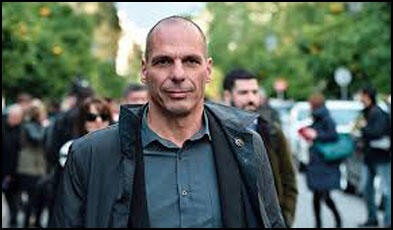
Varoufakis points out that "Amazon sits at the apex of this new order because it owns the cloud computing platform – Amazon Web Services (AWS) – upon which other technological firms, such as Uber, rely, but also large parts of banking, healthcare, logistics, public administration, media and education sectors. Once these businesses are embedded in AWS, switching costs become prohibitive." Varoufakis argues that the government should regulate "behemoths such as Amazon, but they are also becoming its serfs as public institutions run their data and communications on Amazon servers. According to the Guardian, key ministerial departments that have contracts with AWS include the Home Office, Department for Work and Pensions, HMRC, the Ministry of Justice, the Cabinet Office and Defra." (72)
Marxism, Technology and Capitalism
Karl Marx addressed the possibilities of the development of technology to the point where capitalism would not need labour in an article that he wrote in February 1858 called The Fragment on Machines. The article was not published in his lifetime and if it was very few people would have understood it. In the article Marx argues that the capitalist system had become totally dependent on machines. "It is, firstly, the analysis and application of mechanical and chemical laws, arising directly out of science, which enables the machine to perform the same labour as that previously performed by the worker." (73)
The main role of machines is to produce, and the main role of the worker is to supervise them. "Forces of production and social relations – two different sides of the development of the social individual – appear to capital as mere means, and are merely means for it to produce on its limited foundation." This increased productivity could result in a shorter working week. As Marx points out it could lead to a shorter working day "6 rather than 12 hours" but instead it will be used to increase the profits of the capitalist. (74)
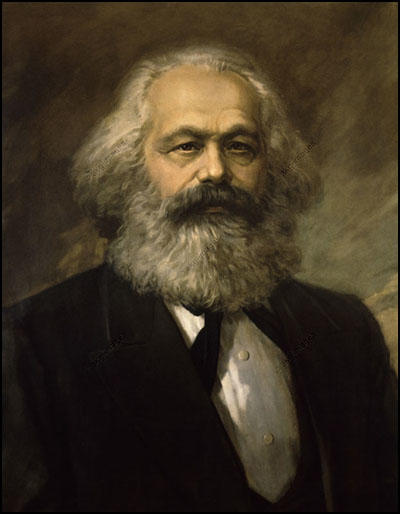
In the article Marx imagined the idea of the "ideal machine". A machine that, he said, add no value at all to the production process and rapidly, over several accounting periods, reduce the price, profit and labour costs of everything. Eventually people would be surrounded by machines that could, if one wanted them to last forever. In other words, in this article, Marx predicted the information economy and the existence of AI in which the world lives today. According to the economist Paul Mason: "Given what Marxism was to become - a theory of exploitation based on the theft of labour time - this is a revolutionary statement. It suggests that, once knowledge becomes a productive force in its own right, outweighing the actual labour spent creating a machine, the big question becomes not one of wages versus profits, but who controls what Marx called the power of knowledge". (75)
Marx pointed out that machines that did not need workers to supervise them will cause serious problems for capitalism. "Capital itself is the moving contradiction, in that it presses to reduce labour time to a minimum, while it posits labour time, on the other side, as sole measure and source of wealth." Capitalism needs workers to earn wages so they can be consumers of the goods produced by the system. "On the one side, then, it calls to life all the powers of science and of nature, as of social combination and of social intercourse, in order to make the creation of wealth independent (relatively) of the labour time employed on it. On the other side, it wants to use labour time as the measuring rod for the giant social forces thereby created, and to confine them within the limits required to maintain the already created value as value. Forces of production and social relations – two different sides of the development of the social individual – appear to capital as mere means, and are merely means for it to produce on its limited foundation. In fact, however, they are the material conditions to blow this foundation sky-high." (76)
Marx made it clear that capitalism cannot survive in a world of low wages, mass unemployment and a growing income gap between the ruling elite and the rest of the population. The main question for us today is to decide on what is going to replace capitalism. Ultimately, whether AI leads to a dystopia of unemployment or a new era of productivity and fulfilling work is not predetermined by the technology. It is a political, economic, and social choice. The transition will be disruptive, and without proactive intervention from governments, the benefits of AI could be unevenly distributed, exacerbating inequality.
Most of this profits from AI will be made by American billionaires who pay little tax in this country. As Antonio Gramsci: "The old world is dying, and the new world struggles to be born; now is the time of monsters." (77) In the 1930s the UK government played its part in destroying fascism. Will our current government protect us from American tech billionaires, or will it continue to sign tempting partnership deals with "monsters"? Or in the words of Rosa Luxemburg, who had been imprisoned for her opposition to the First World War in 1915: "Bourgeois society stands at the crossroads, either transition to socialism or regression into barbarism." (78)
References
(1) Dan Briody, The Halliburton Agenda: The Politics of Oil and Money (2004) pages 132-133
(2) Barr McClellan, Blood, Money & Power (2003) page 50
(3) Robert A. Caro, The Path to Power (1982) page 577
(4) Ronnie Dugger, The Politician: The Life and Times of Lyndon Johnson (1982) page 229
(5) Stanley Karnow, Vietnam: A History (1983) page 326
(6) Robert Bryce, Cronies (2004) pages 105-108
(7) J. J. Mason, Richard Arkwright: Oxford Dictionary of National Biography (2004-2014)
(8) Brad Young, Sky News (11 October 2025)
(9) History of Robotics in the Automotive Industry (June 4, 2021)
(10) John Maynard Keynes, Economic Possibilities for our Grandchildren (1930)
(11) Emily-Rose Payne, UK CEO Pay Hits Record High (19 August 2025)
(12) Harry Howard, The Daily Mail (18 May 2022)
(13) Louisa Valentin & Lavinia Steinfort, The Living Legacy of Privatisation in the United Kingdom (5 December 2024)
(14) Dominic Ponsford, Press Gazette (May 27, 2025)
(15) BBC News (6 September 2024)
(16) BBC News (20 October 2025)
(17) Phoebe Liu, Forbes Magazine (9 October, 2025)
(18) Stan Choe, PBS News (3 November 2025)
(19) Carolane de Palmas, FX News Group (November 11, 2025)
(20) Robert Booth, The Guardian (1 December 2005)
(21) BBC News (18 November 2025)
(22) BBC News (19 November 2025)
(23) Bloomberg News (22 November 2011)
(24) Peter Thiel, The Education of a Libertarian (April 13, 2009)
(25) Andy Greenberg, Forbes Magazine (Aug 14, 2013)
(26) Steve Rose, The Guardian (18 November 2025)
(27) Adam Ciralsky, Vanity Fair Magazine (September 20, 2017)
(28) Steve Rose, The Guardian (18 November 2025)
(29) Mark Wilding, Prospect Magazine (November 12, 2025)
(30) Steve Rose, The Guardian (18 November 2025)
(31) BBC News (28 March 2020)
(32) Alan Macleod, Mint Press News (09 Oct 2024)
(33) Mark Wilding, Prospect Magazine (November 12, 2025)
(34) Olivia Solon, Bloomberg News (September 30, 2022)
(35) Mark Wilding, Prospect Magazine (November 12, 2025)
(36) Jon Tricket, The Morning Star (December 2, 2023)
(37) BBC News (17 September 2025)
(38) Richard Whittle, The Conversation (23 October 2025)
(39) Faisal Islam, BBC News (20 September 2025)
(40) Ethan Stone, Open Democracy (18 September 2024)
(41) Keir Starmer, statement (26 September 2025)
(42) Steve Rose, The Guardian (18 November 2025)
(43) Mark Wilding, Prospect Magazine (November 12, 2025)
(44) Brad Young, Sky News (11 October 2025)
(45) The Guardian (9 June 2025)
(46) Sky News (4 November 2025)
(47) Michael Cross, Law Society Gazette (9 June 2021)
(48) BBC News (14 January 2025)
(49) Dr Anabelle Painter, The Pulse (7 June 2024)
(50) Department of Health and Social Care, press release (21 October 2025)
(51) BBC News (12 November 2025)
(52) Aaron Mok, Business Insider (22 March, 2023)
(53) How Artificial Intelligence Will Change the World (20 October 2025)
(54) Goldman Sachs, Generative AI could raise global GDP by 7% (5 April 2023)
(55) Brian Snowdon and Howard R. Vane, Modern Macroeconomics: Its Origins, Development and Current State (2005) page 61
(56) Robert Reich, The Guardian (23 June, 2021)
(57) Ian Shine, We often hear that AI will take our jobs. But what jobs will it create? (18 September 2023)
(58) Tony Blair Institute, The Impact of AI on the Labour Market (8th November 2024)
(59) Jared Kaplan, The Guardian (2 December 2025)
(60) Dario Amodei, CNN News (29 May 2025)
(61) Brad Young, Sky News (11 October 2025)
(62) Quintin Hoare and Geoffrey Nowell Smith, Introduction, Selections from the Prison Notebooks (1971) page xxxix
(63) Antonio Gramsci, The Prison Notebooks (1971) pages 275-276
(64) Howard Reed, The Inequality Boom (22 July 2013)
(65) Richest 1% grab nearly twice as much new wealth as rest of the world put together (16 January 2023)
(66) Karen Hao, Reuters (July 3, 2025)
(67) Virginia Eubanks, Nature (18 November 2025)
(68) Reynolds Antwi Agyapong, Will Artificial Intelligence end capitalism and with-it western democracy? (25 March 2025)
(69) Willem Moore, The Canary (30 November 2025
(70) Tim Wu, The Guardian (23 November 2025)
(71) Robert Booth, The Guardian (1 December 2005)
(72) Yanis Varoufakis, The Guardian (7 November 2025)
(73) Karl Marx, The Fragment on Machines, The Grundrisse (1993) page 704
(74) Karl Marx, The Fragment on Machines, The Grundrisse (1993) page 706
(75) Paul Mason, Frontier Vol. 48, No. 7 (August, 2015)
(76) Karl Marx, The Fragment on Machines, The Grundrisse (1993) page 707
(77) Antonio Gramsci, The Prison Notebooks (1971) pages 275-276
(78) Rosa Luxemburg, The Crisis in German Social Democracy (1915) page 6
Previous Posts
Technofeudalism: Is AI going to destroy Capitalism and Democracy? (19th November, 2025)
How do we stop Nigel Farage from forming a government (14th October, 2025)
Donald Trump and the Deep State (13th August, 2025)
The History of Fascism: Are Vladimir Putin and Donald Trump Fascists? (10th June, 2025)
The CIA memorandum on the death of Gary Underhill (6th April, 2025)
Should George Orwell have chosen the title, 2030, instead of 1984? Keir Starmer as Big Brother. (17th March, 2025)
The Evolution of the Brain. Can you make yourself happy? (16th January, 2025)
Technology and the History Classroom: Should the Teaching Profession Embrace AI? (20th November, 2024)
Venetia Stanley, H. H. Asquith and the First World War (22nd August, 2024)
The General Election Campaign: The Tyranny of the Centre (4th July, 2024)
In Defence of the New History (20th March, 2024)
The Political History of Keir Starmer (25th January, 2024)
JFK Assassination: What Happened in the Trauma Room (23rd November, 2023)
Sir Keir Starmer and his Broken Pledges (1st September, 2023)
Should history students be using ChatGBT? (28th May, 2023)
A historical account of the Daily Mail, the Conservative Party and Migration (18th March, 2023)
Art and the Women's Suffrage Movement (20th January, 2023)
Emancipation of Women: 1870-1928 (15th November, 2022)
The Struggle for Women's Rights: 1500-1870 (21st September, 2022)
The real reason why the FA banned women from playing on their grounds (1st August, 2022)
The WSPU Young Hot Bloods and the Arson Campaign (26th May, 2022)
Interpretations in History (18th April, 2022)
The Student as Teacher (31st December, 2021)
History Simulations in the Classroom (30th November, 2021)
Walter Tull: Football and War Hero (20th October, 2021)
Child Labour and Freedom of the Individual (26th July, 2021)
Don Reynolds and the Assassination of John F. Kennedy (15th June, 2021)
Richard Nixon and the Conspiracy to kill George Wallace in 1972 (5th May, 2021)
The Connections between Watergate and the JFK Assassination (2nd April, 2021)
The Covid-19 Pandemic: An Outline for a Public Inquiry (4th February, 2021)
Why West Ham did not become the best team in England in the 1960s (24th December, 2000)
The Lyndon Baines Johnson Tapes and the John F. Kennedy Assassination (9th November, 2020)
It is Important we Remember the Freedom Riders (11th August, 2020)
Dominic Cummings, Niccolò Machiavelli and Joseph Goebbels (12th July, 2020)
Why so many people in the UK have died of Covid-19 (14th May, 2020)
Why the coronavirus (Covid-19) will probably kill a higher percentage of people in the UK than any other country in Europe.. (12th March, 2020 updated 17th March)
Mandy Rice Davies and Christine Keeler and the MI5 Honey-Trap (29th January, 2020)
Robert F. Kennedy was America's first assassination Conspiracy Theorist (29th November, 2019)
The Zinoviev Letter and the Russian Report: A Story of Two General Elections (24th November, 2019)
The Language of Right-wing Populism: Adolf Hitler to Boris Johnson (11th October, 2019)
The Political Philosophy of Dominic Cummings and the Funding of the Brexit Project (15th September, 2019)
What are the political lessons to learn from the Peterloo Massacre? (19th August, 2019)
Crisis in British Capitalism: Part 1: 1770-1945 (9th August, 2019)
Richard Sorge: The Greatest Spy of the 20th Century? (29th July, 2020)
The Death of Bernardo De Torres (26th May, 2019)
Gas Masks in the Second World War killed more people than they saved (9th May, 2019)
Did St Paul and St Augustine betray the teachings of Jesus? (20th April, 2019)
Stanley Baldwin and his failed attempt to modernise the Conservative Party (15th April, 2019)
The Delusions of Neville Chamberlain and Theresa May (26th February, 2019)
The statement signed by Robert F. Kennedy Jr. and Kathleen Kennedy Townsend (20th January, 2019)
Was Winston Churchill a supporter or an opponent of Fascism? (16th December, 2018)
Why Winston Churchill suffered a landslide defeat in 1945? (10th December, 2018)
The History of Freedom Speech in the UK (25th November, 2018)
Are we heading for a National government and a re-run of 1931? (19th November, 2018)
George Orwell in Spain (15th October, 2018)
Anti-Semitism in Britain today. Jeremy Corbyn and the Jewish Chronicle (23rd August, 2018)
Why was the anti-Nazi German, Gottfried von Cramm, banned from taking part at Wimbledon in 1939? (7th July, 2018)
What kind of society would we have if Evan Durbin had not died in 1948? (28th June, 2018)
The Politics of Immigration: 1945-2018 (21st May, 2018)
State Education in Crisis (27th May, 2018)
Why the decline in newspaper readership is good for democracy (18th April, 2018)
Anti-Semitism in the Labour Party (12th April, 2018)
George Osborne and the British Passport (24th March, 2018)
Boris Johnson and the 1936 Berlin Olympics (22nd March, 2018)
Donald Trump and the History of Tariffs in the United States (12th March, 2018)
Karen Horney: The Founder of Modern Feminism? (1st March, 2018)
The long record of The Daily Mail printing hate stories (19th February, 2018)
John Maynard Keynes, the Daily Mail and the Treaty of Versailles (25th January, 2018)
20 year anniversary of the Spartacus Educational website (2nd September, 2017)
The Hidden History of Ruskin College (17th August, 2017)
Underground child labour in the coal mining industry did not come to an end in 1842 (2nd August, 2017)
Raymond Asquith, killed in a war declared by his father (28th June, 2017)
History shows since it was established in 1896 the Daily Mail has been wrong about virtually every political issue. (4th June, 2017)
The House of Lords needs to be replaced with a House of the People (7th May, 2017)
100 Greatest Britons Candidate: Caroline Norton (28th March, 2017)
100 Greatest Britons Candidate: Mary Wollstonecraft (20th March, 2017)
100 Greatest Britons Candidate: Anne Knight (23rd February, 2017)
100 Greatest Britons Candidate: Elizabeth Heyrick (12th January, 2017)
100 Greatest Britons: Where are the Women? (28th December, 2016)
The Death of Liberalism: Charles and George Trevelyan (19th December, 2016)
Donald Trump and the Crisis in Capitalism (18th November, 2016)
Victor Grayson and the most surprising by-election result in British history (8th October, 2016)
Left-wing pressure groups in the Labour Party (25th September, 2016)
The Peasant's Revolt and the end of Feudalism (3rd September, 2016)
Leon Trotsky and Jeremy Corbyn's Labour Party (15th August, 2016)
Eleanor of Aquitaine, Queen of England (7th August, 2016)
The Media and Jeremy Corbyn (25th July, 2016)
Rupert Murdoch appoints a new prime minister (12th July, 2016)
George Orwell would have voted to leave the European Union (22nd June, 2016)
Is the European Union like the Roman Empire? (11th June, 2016)
Is it possible to be an objective history teacher? (18th May, 2016)
Women Levellers: The Campaign for Equality in the 1640s (12th May, 2016)
The Reichstag Fire was not a Nazi Conspiracy: Historians Interpreting the Past (12th April, 2016)
Why did Emmeline and Christabel Pankhurst join the Conservative Party? (23rd March, 2016)
Mikhail Koltsov and Boris Efimov - Political Idealism and Survival (3rd March, 2016)
Why the name Spartacus Educational? (23rd February, 2016)
Right-wing infiltration of the BBC (1st February, 2016)
Bert Trautmann, a committed Nazi who became a British hero (13th January, 2016)
Frank Foley, a Christian worth remembering at Christmas (24th December, 2015)
How did governments react to the Jewish Migration Crisis in December, 1938? (17th December, 2015)
Does going to war help the careers of politicians? (2nd December, 2015)
Art and Politics: The Work of John Heartfield (18th November, 2015)
The People we should be remembering on Remembrance Sunday (7th November, 2015)
Why Suffragette is a reactionary movie (21st October, 2015)
Volkswagen and Nazi Germany (1st October, 2015)
David Cameron's Trade Union Act and fascism in Europe (23rd September, 2015)
The problems of appearing in a BBC documentary (17th September, 2015)
Mary Tudor, the first Queen of England (12th September, 2015)
Jeremy Corbyn, the new Harold Wilson? (5th September, 2015)
Anne Boleyn in the history classroom (29th August, 2015)
Why the BBC and the Daily Mail ran a false story on anti-fascist campaigner, Cedric Belfrage (22nd August, 2015)
Women and Politics during the Reign of Henry VIII (14th July, 2015)
The Politics of Austerity (16th June, 2015)
Was Henry FitzRoy, the illegitimate son of Henry VIII, murdered? (31st May, 2015)
The long history of the Daily Mail campaigning against the interests of working people (7th May, 2015)
Nigel Farage would have been hung, drawn and quartered if he lived during the reign of Henry VIII (5th May, 2015)
Was social mobility greater under Henry VIII than it is under David Cameron? (29th April, 2015)
Why it is important to study the life and death of Margaret Cheyney in the history classroom (15th April, 2015)
Is Sir Thomas More one of the 10 worst Britons in History? (6th March, 2015)
Was Henry VIII as bad as Adolf Hitler and Joseph Stalin? (12th February, 2015)
The History of Freedom of Speech (13th January, 2015)
The Christmas Truce Football Game in 1914 (24th December, 2014)
The Anglocentric and Sexist misrepresentation of historical facts in The Imitation Game (2nd December, 2014)
The Secret Files of James Jesus Angleton (12th November, 2014)
Ben Bradlee and the Death of Mary Pinchot Meyer (29th October, 2014)
Yuri Nosenko and the Warren Report (15th October, 2014)
The KGB and Martin Luther King (2nd October, 2014)
The Death of Tomás Harris (24th September, 2014)
Simulations in the Classroom (1st September, 2014)
The KGB and the JFK Assassination (21st August, 2014)
West Ham United and the First World War (4th August, 2014)
The First World War and the War Propaganda Bureau (28th July, 2014)
Interpretations in History (8th July, 2014)
Alger Hiss was not framed by the FBI (17th June, 2014)
Google, Bing and Operation Mockingbird: Part 2 (14th June, 2014)
Google, Bing and Operation Mockingbird: The CIA and Search-Engine Results (10th June, 2014)
The Student as Teacher (7th June, 2014)
Is Wikipedia under the control of political extremists? (23rd May, 2014)
Why MI5 did not want you to know about Ernest Holloway Oldham (6th May, 2014)
The Strange Death of Lev Sedov (16th April, 2014)
Why we will never discover who killed John F. Kennedy (27th March, 2014)
The KGB planned to groom Michael Straight to become President of the United States (20th March, 2014)
The Allied Plot to Kill Lenin (7th March, 2014)
Was Rasputin murdered by MI6? (24th February 2014)
Winston Churchill and Chemical Weapons (11th February, 2014)
Pete Seeger and the Media (1st February 2014)
Should history teachers use Blackadder in the classroom? (15th January 2014)
Why did the intelligence services murder Dr. Stephen Ward? (8th January 2014)
Solomon Northup and 12 Years a Slave (4th January 2014)
The Angel of Auschwitz (6th December 2013)
The Death of John F. Kennedy (23rd November 2013)
Adolf Hitler and Women (22nd November 2013)
New Evidence in the Geli Raubal Case (10th November 2013)
Murder Cases in the Classroom (6th November 2013)
Major Truman Smith and the Funding of Adolf Hitler (4th November 2013)
Unity Mitford and Adolf Hitler (30th October 2013)
Claud Cockburn and his fight against Appeasement (26th October 2013)
The Strange Case of William Wiseman (21st October 2013)
Robert Vansittart's Spy Network (17th October 2013)
British Newspaper Reporting of Appeasement and Nazi Germany (14th October 2013)
Paul Dacre, The Daily Mail and Fascism (12th October 2013)
Wallis Simpson and Nazi Germany (11th October 2013)
The Activities of MI5 (9th October 2013)
The Right Club and the Second World War (6th October 2013)
What did Paul Dacre's father do in the war? (4th October 2013)
Ralph Miliband and Lord Rothermere (2nd October 2013)