

Sydney (Syd) Puddefoot
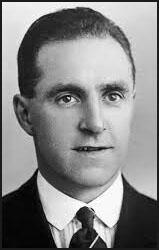
Sydney (Syd) Puddefoot, the son of Harry and Sarah Puddefoot, was born at 18 St Paul's Road (now St Paul's Way), Limehouse, on 17th October 1894. Only five out of 13 of Syd's brothers and sisters reached adulthood. (1)
Puddefoot was born into a world of extreme poverty with more chance of dying than living before he reached his fifth birthday. In the East End of London, one of the most deprived areas of England, thousands of undernourished young children died of scarlet fever, whooping cough, TB and influenza in the days before advances in medical knowledge and mass vaccination brought these killer diseases under control. (2)
In the eight square miles of the East End lived over 400,000 people in appalling housing. It was known for its overcrowded living spaces and high criminal activity. In the area of Whitechapel alone, the mortality rate for children under the age of five was around 60%. This was mostly due to bad living conditions. "The Medical Inspector for Whitechapel reported in 1873 that one fifth of the district's children died before they were one year old and one-third before they were five. In a section of the district close to St Jude's, moreover, the rate of mortality of 15 children under five was as high as 61.1%. (3)
Thomas Henry Huxley described East London as "joyless, a mass of starving, wretched, hopeless human beings", with "some of its most vigorous inhabitants making no secret of their war against society." (4) Samuel Augustus Barnett and his wife, Henrietta Barnett moved to St Jude's, a parish in Whitechapel. Barnett argued that the people of East London "live without knowledge, without hope, and often without health." He added that "The needs of East London are often urged, but they are little understood". (5)
Cornelius Beal
In 1903 the Puddefoots moved to 1, Dirleton Road, Stratford, in the County Borough of West Ham. Later that year, eight-year-old Syd Puddefoot was enrolled at the Abbey Road Elementary School. At the time the school accommodated 1,660 pupils. It was at this school that Puddefoot first began to show some ability on the football field. This upset his mother as she wanted him to concentrate on his academic work. (6)
As Puddefoot later explained: "When I suggested to my mother that I should be allowed to play football regularly she came to the conclusion that Abbey Road was not the place for her boy." His mother arranged for her son to be transferred to Park Elementary School in Stratford. What she did not know that the teacher at the new school was also an excellent football coach. His name was Cornelius Beal. As Puddefoot was later to tell a football reporter: "Perhaps mother did not know this, or perhaps she had not heard that sport was one of Mr Beal's strong points. She did not know that Mr Beal was one of the finest sportsmen in the country. He was a grand cricketer, a clever footballer, and a gentleman. At all events I was no sooner settled down at my new school than Mr Beal found out that I could play football, and I became a member of the team. Mr Beal used to coach us and tell us our faults and show us how to overcome them. And a grand coach he was, too… We had some grand games. I started as an outside left and scored so many goals and I was transferred to the centre forward position. I was a very small boy, as was known as Titch." (7)
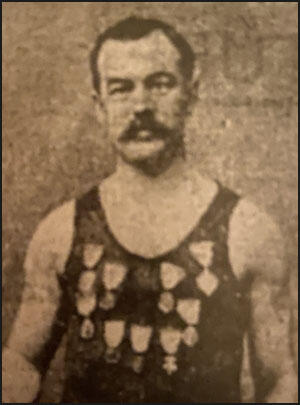
Cornelius Beal was an outstanding football coach and he turned Park School into a breeding ground for professional footballers. In fact, Park School eventually became known as West Ham's first academy of football. It has been claimed that Park School team that played on a Saturday morning regularly attracted crowds of over 1,000 to the Ham Park Road ground in West Ham. His first student who he helped to turn into a great footballer was Charlie Dove, who was captain of Park School football team, leading his team to victory in two local competitions. Soon after leaving school at thirteen Dove found work with the Thames Ironworks and Shipbuilding Company as an apprentice riveter and by 1897 was playing for for Thames Ironworks. (8)
As the East Ham Echo pointed out: "Born just over 19 years ago, Charles Dove first began his football career with Park School - a team that has always been classed as one of the finest schoolboy combinations. There he figured at full back and just by way of encouragement won two medals when playing in this position.... Three seasons ago joined the ranks of Thames Ironworks and has played with them ever since. Even when joining them his true position was not apparent. He played centre forward and full back and it was not until he had occupied nearly every place - with the exception of goal - that his worth as a right half was demonstrated. In this berth he plays a brilliant game." (9)
Beal was a great fan of West Ham United and a significant number of boys from his school went on to play for the club. Cornelius Beal developed a good relationship with Syd King, who at the end of the 1901-02 season was appointed as club secretary/manager. Beal kept King informed of talented players in the Park School team. The first of these important signings was George Webb. The co-owner of a toy factory he originally signed as an amateur for West Ham United in August 1905 and for the first few years he only played for the reserves. (10)
In 1910 Webb represented England at amateur level against Switzerland. The following year he played against Wales, Belgium, Germany and Holland. Webb, the first West Ham United player to do this, won his first full international cap for England against Wales on 14th March 1911. Webb scored in England's 3-0 victory. Webb also played in the game against Scotland that was drawn 1-1 on 1st April 1911. He was described as "fast, had a great shot while a hefty physique made him even more redoubtable". In July 1912 Webb joined Manchester City in the First Division of the Football League. He had scored 32 cup and league goals for West Ham. (11)
Syd Puddefoot joins West Ham United
Syd Puddefoot was a talented footballer and in his final year he scored 147 goals. Cornelius Beal later told a reporter, Puddefoot "was brilliant at his studies - brilliant all-round. He was one of the best scholars in the school. I never remember having to spank him, and sometimes one has to administer the cane a little. He was well-liked by everyone - a general favourite". (12) Cornelius Beal was a good friend of Charlie Paynter, the coach of West Ham United, he told him about his potential to become a top class striker. Paynter passed this information onto Syd King the manager. King watched him play for London Juniors against Surrey Juniors in 1912. (13)
Puddefoot later recalled: "Before I left school, I knew that someday I'd be given the opportunity to play for West Ham United FC. I was a member of Park School team, and during my schooldays I played many games on West Ham's ground. Mr Syd King, manager of the club, evidently thought I develop, because he sought me out one day and asked me if I would play for them when I had finished my school days. I replied that I would be only too pleased to do so. Play for West Ham? At that time that was my greatest ambition. However, I didn't say so to the club officials, and they kept an eye on me all the time I played with juniors." (14)
Syd Puddefoot,signed amateur forms for West Ham United on 25 June 1912. Reg Groves pointed out: "The lad was keen, eager to learn; many an evening he would spend with Charlie Paynter going over moves and movements in the game." (15) A centre-forward, he joined a team that already included two outstanding strikers in Danny Shea and George Hilsdon. However, he won a place in the starting line-up against Brighton & Hove Albion on 21st March, 1913, and scored in the 1-1 draw. However, he was unable to add to this total in the three other games he played in the 1912-1913 season. (16)
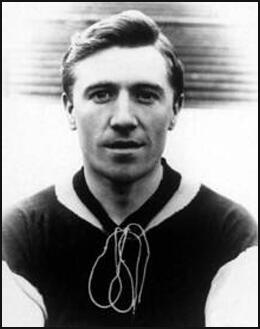
Danny Shea was transferred to Blackburn Rovers in 1913 for a record fee of £2,000. This increased his opportunities at West Ham United. In those early games star striker, George Hilsdon, helped him develop his game. " I have much to thank him for. He (George Hilsdon) pointed out my faults in a calm, quiet sort of way, and followed his criticisms with a few words telling me how to get over the faults… I was very grateful to George, and every time I scored a goal, I gave him a half-crown. When the others discovered that I was doing this they made it a standing joke. It certainly was an expensive habit when I got three of four goals in one game, but I didn't mind. I wouldn't have got the goals perhaps had George not given me so many wrinkles." (17)
Puddefoot did much better in the 1913-1914 season. The East Ham Echo reported on Puddefoot performance against Exeter City on Christmas Day. " "The outstanding feature of a very exciting game… was the form of Puddefoot. He is a young player who should develop into a first-class centre-forward. He has plenty of dash and pluck, feeds his wings and partners well, and is ever ready to take advantage of the least slip on the part of the opposition." (18)
The national press was taking an interest in this emerging talent. The Athletic News reported "He (Puddefoot) is not only fast, but becomes doubly so by his quickness off the mark, and this, with a tantalising swerve and the modesty of not being too anxious to score if he finds himself marked, will always go to make him a great danger to any defence that is at all shaky, like that of Bristol Rovers was on Saturday." (19) The Daily Mail commented on his youth: "He has the face and the smile of a boy in the Upper Sixth, legs like pine trees, and the swift savage blow of the panther" (20)
Puddefoot established an FA Cup goal scoring record for the club on 10th January, 1914, when he scored five times in an 8-1 victory over Chesterfield. Puddefoot also developed a good partnership with Richard Leafe who had been purchased from Sheffield United. (21) By the end of the season the nineteen-year-old had scored 16 goals in 20 games. (22)
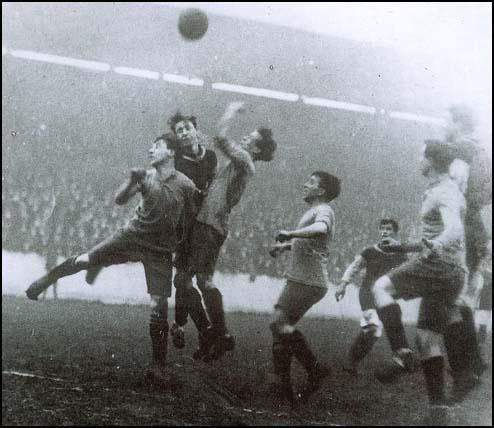
West Ham United finished in 4th place of the Southern League in the 1914-15 season. Puddefoot scored 18 goals in 18 games. As Philip Stevens pointed out: "Puddy's goalscoring feats were becoming the stuff of legend... Puddy had made his mark at West Ham and established a growing reputation in the Southern League. In just over two seasons his physical courage, skill and goalscoring feats endeared the local boy to all Hammers fans. Syd King saw his young local hero as the heart of a West Ham side capable of promotion to the Football League." (23)
The First World War
Great Britain declared war on Germany on 4th August, 1914. Cricket and rugby competitions stopped almost immediately after the outbreak of the First World War. However, the Football League continued with the 1914-15 season. Most football players were professionals and were tied to clubs through one-year renewable contracts. Players could only join the armed forces if the clubs agreed to cancel their contracts. At the end of the season all player' contracts were suspended for the duration of the war and Puddefoot was free to play where he liked. (24)
Puddefoot found work in a munitions factory and played for West Ham United in the war-time London Combination league. Puddefoot, who was not conscripted into the British Army until late into the conflict, made 126 appearances over the next couple of years. Puddefoot continued in good form and scored a hat-trick against Crystal Palace on 4th December. This was followed by five goals on Christmas Day in the clubs 8-2 victory over Arsenal. His 25 goals put him amongst the country's leading marksmen. (25)
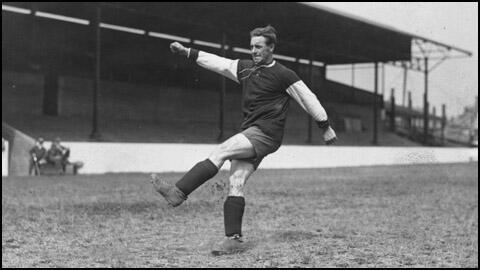
Danny Shea returned to West Ham United during the First World War and he formed a productive partnership with Syd Puddefoot. Shea scored 32 in 32 games whereas Puddefoot scored 24 in 34 games. For the first time West Ham exceeded 100 goals in a season. West Ham won the London Combination title with seven points to spare. They used 49 players in the season, 30 of whom were "guests". (26)
Puddefoot spent the first three years of the war in a munitions factory. As Brian Belton, the author of War Hammers (2007) has pointed out: "Syd Puddefoot worked long hours, exhausting and often dangerous shifts in munitions factories." (27) However, Puddefoot was desperate to fight in the British Army on the Western Front and has he later explained: "When things were fairly humming in France I decided to do my best to be sent to the front. At last I succeeded in sneaking into a draft." (28)
Puddefoot reported to the Stratford Recruiting Office for a medical on 2nd April 1917. The Medical Officer reported two slight defects though at this stage he deemed them "not sufficient to cause rejection" from active service. He was told he had defective teeth and a persistent bacterial infection, for which Puddefoot had already received hospital treatment. He had a second medical on 24th August and this time Medical Officer judged him to be "permanently and totally disabled for Military Service." (29)
West Ham 1919-1922
West Ham's application to join the Football League in 1919 was successful and the Hammers started the season in the Second Division. Puddefoot had no difficulty adapting to this higher standard of football. He scored 21 league goals in 39 games (the next top scorer, George Butcher, only managed 8 goals). This included hat-tricks against Port Vale, Bury and Nottingham Forest. Puddefoot also did well in the FA Cup with 5 goals in 4 games. By the end of the 1919-1920 season West Ham was in 7th place with 47 points. (30)
The Athletic News argued that Puddefoot should be playing for England: "Puddefoot led the line as an international should. Incomparably the most gifted forward on the field, his skill in gathering the ball and his distribution of it, whether a gentle glide to Bailey or Butcher or a long sweeping pass to his ever-ready wingmen were alike almost ideal. Always a well-marked man, he yet managed to coax his opponents' attentions with monotonous regularity – from the Bury defenders' point of view – by delightful footwork and a quick-moving brain." (31)
Puddefoot continued to impress in the 1920-1921 season and it was rumoured that clubs in the First Division were looking at him. In October 1920 West Ham made it clear that Puddefoot was not for sale: "We have heard it suggested that Sid Puddefoot is playing up for a transfer. The suggestion is an insult to a player whose heart is with West Ham United but who is out of luck and form at present, and who is a marked man with opposing centre halves. When his immediate colleagues succeed in drawing the opposition away from him a little more, then we shall find him getting goals." (32)
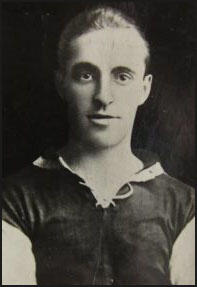
After a match against Sheffield Wednesday where Puddefoot scored all four goals in the game the London Daily News reported: "Make no mistake about it, Puddefoot shaped like an England player in this game. He had class written all over him. The fact that he scored four goals speaks for itself, but that was not all he did; he led the West Ham attack brilliantly, slipping the ball out to his wings with deft quickness and with almost unfailing accuracy." (33)
West Ham United finished in 5th place in the 1920-21 season with 48 points. Puddefoot was once again top scorer with 29 goals in 38 league games. Syd King had managed to build a very good West Ham team that included Jimmy Ruffell, George Kay, Edward Hufton, Jack Tresadern, Vic Watson, Sid Bishop, Richard Leafe, Billy Brown and Jack Young, however, West Ham was too dependent on Puddefoot scoring. (34)
Transfer of Syd Puddefoot
It was hoped that Puddefoot's goals would help gain West Ham promotion to the First Division. However, this idea was rejected by one newspaper: "You may take it from me that the stories are all moonshine. Puddefoot is quite happy at West Ham, where he lives with his parents. You may also add that there doesn't seem to be any particular reason why he should move – at any rate, not financially. He is to have a benefit of five hundred pounds at least, and we would get precious little more than that if he were transferred tomorrow." (35)
However, Puddefoot was unhappy with the contract that he was being offered by West Ham United - £9 a week and a guaranteed benefit of £500. When he refused to accept the contract the Board responded by threatening to report Puddefoot to the FA under Rule 31, which provided that "a club shall be entitled to retain players whom they are prepared to pay at the rate of £234 a year... unless the players satisfy the FA Council that there are special grounds for allowing them to change their clubs." Puddefoot reluctantly agreed to sign his contract. (36)
The rumours continued that several top clubs wanted to buy West Ham's star player. In February 1922 the London Daily News reported that manager Syd King was determined to keep Puddefoot: "The Upton Park while West Ham were in the running for promotion." (37) West Ham supporters were pleased to read in The Daily Express that: "The proposals made to West Ham for the transfer of Puddefoot to Tottenham Hotspur have been abandoned. The announcement in last week's Daily Express that there was a likelihood of the international centre-forward migrating to North London caused much consternation in the Upton Park district, and it was soon made clear that if Puddefoot were allowed to go it would be bitterly resented by the many thousands of regular supporters of the club." (38)
What the supporters did not know was that at the time the West Ham board was involved in secret negotiations to sell Puddefoot to the Scottish club Falkirk. Puddefoot later explained the background to the deal: "I received a huge surprise. Mr Nicol of the Falkirk club called on me at my home while I was having lunch. 'Hello, what are you doing here?' I asked, when I had recovered from the initial surprise on seeing him. 'I've come down for you', he said. 'Well, West Ham want a big fee for me,' I told him, and I didn't for a moment believe that Falkirk would pay the fee required. 'If Falkirk pay that fee and can arrange matters with West Ham, will you sign for us?' asked Mr Nicol, and when I replied that I would we both walked back to the West Ham United ground to see the officials." (39)
Puddefoot was keen on joining Falkirk as Scottish clubs did not follow the Football League in having a maximum wage or any official restriction on signing-on fees. In 1922 the maximum wage in England was £9 per week during the playing season, reduced to £6 for the 15-week summer close season. Falkirk offered Puddefoot £10 a week plus a £1,000 signing on fee and suggested they were willing to help him set up a business in Scotland after he retired from football. (40) Puddefoot later admitted: "Falkirk, apart from football, offers me business opportunities which would not come my way in London. A deciding factor. I believe in second strings. The footballer of today is the businessman of tomorrow." (41)
Puddefoot did not expect Falkirk to pay the fee being demanded by West Ham: "He (Syd King) was delightfully frank as he balanced himself on his chair which was an extension telephone. "Well, what are you prepared to offer for Puddefoot?" the West Ham manager asked. A Falkirk director spoke, and as he did so Syd King toppled over backwards and struck his head on the extension telephone – the director had said ' £5,000'. To the day of his untimely death, Syd King carried a small scar as a result of that fall backwards when he received what he described as his greatest shock." (42)
The fee was the highest ever paid for a professional footballer. Puddefoot had netted 107 goals in 194 games for the club. Club supporters considered it a great betrayal. As West Ham historian, Brian Belton has pointed out: "The transfer became the most chronicled event involving an individual in the long history of West Ham United: the Hammers' supporters were angry at the departure of the local lad that they had come to call 'our Puddy', and accused the board of lacking ambition and of putting ground developments ahead of success on the field." (43)
Peter Morris has argued that the real reason that West Ham sold Puddefoot was the club was in financial trouble. Since the end of the First World War the club had spent a total of £21,000 on the stadium, of which £8,000 was still owed by the time of the transfer. "The need to cover outstanding debts and projected expenses had led a number of Directors to loan the club money or act as personal guarantors on future expenditure. The inflow of nearly £4,500 into the club - £5,000 less £260 paid to Puddefoot as accrued benefit and a £300 bonus paid to Syd King for brokering the deal." (44)
An added bonus was that Puddefoot planned replacement, Vic Watson, was only on £6 a week compared to the £9 paid to Syd Puddefoot, so a further £150 per annum was saved by the club. The Daily Express reported: "Victor Watson may never rise to the fame achieved by Puddefoot, but when they let the latter go to Falkirk, with their best wishes for 'every success and prosperity in his future career', the West Ham directors did so in the full conviction that they had a thoroughly reliable centre-forward to take his place." (45)
West Ham's next home game was against Hull City. The club used the programme to defend its decision to sell Syd Puddefoot: "The departure of Syd Puddefoot came as no surprise to those intimately connected with him. It is an old saying that everyone has one chance in life to improve themselves and Syd Puddefoot is doing the right thing for himself in studying his future. We understand that he will be branching out in commercial circles in Falkirk and when his football days are over he will be assured of a nice little competency." (46)
West Ham fans were upset by the decision to sell Puddefoot. The Reynold's News reported: "Puddefoot's transfer was the great topic of the waiting crowd, and the noisiest of the home supporters resented the transfer strongly. They showed their resentment by giving the visitors a far heartier reception than they gave the home team, and Hull City had the unusual experience of playing on an away ground at which most of the spectators appeared to be hoping earnestly to see them win." (47) George Kay scored after only four minutes to give West Ham an early lead. One fan shouted out that Kaye would be the next player to be sold. (48)
West Ham fans were furious as at the time the club was sitting in third place in the Second Division league table, level on points with second-placed Fulham? After the loss of Puddefoot West Ham won only six of its last 15 games. Its defence did well but the forwards could only score sixteen goals during this period. West Ham finished in fourth position and once again missed out in promotion to the First Division. (49)
The record fee received by West Ham started a national debate on the morality of football transfers: Sydney Horer, writing in the London Daily News argued: "Abolish this nauseous trading in human skill. Let every team manager develop the talent that is to be found in every district… develop your players; don't buy or sell them! Let Sunderland men play for Sunderland, and Southampton men for Southampton." (50)
Syd Puddefoot at Falkirk
Syd Puddefoot also went to Falkirk for football reasons. "I am glad of the opportunity of playing again in Scotland because in my humble opinion footer as played north of the Tweed is far superior to that which passes for the game South. The game south is fast becoming more or less of a rough and tumble. Rush tactics seem to be the order of the day, and far more attention is given to the ball. It is not the game that was played, say, even ten years ago. In all this run-and-rush the scientific, clever, subtle play is lost… in the North the play is of a much slower type. The hard-headed Scot pays to see football played and demands that it shall be played in the full sense of the word. Therefore, each man has an opportunity to use his skill to the best advantage." (51)
Falkirk were having their best league season for many years and were lying in sixth place with 12 games to go when Puddefoot joined the club. His first game was against Third Lanark and although the club could only manage a 1-1 draw Puddefoot had a great game and the opposition goalkeeper, Jimmy Brownlie, afterwards said that he was "the greatest centre forward he had ever seen." (52)
In the next game Puddefoot scored the only goal in the game against Kilmarnock. "No sooner had the ball reached Syd than he was rushed by an opponent. He cutely deceived him, and eluded several others before he got into a scoring position, and then he flashed the ball into the net. His effort left the custodian helpless. It was a grand shot, and it gave the spectators an indication of the calibre of the man from West Ham." (53)
However, despite Puddefoot scoring regularly his goals were not enough for Falkirk to win the league title. As one journalist pointed out: Syd Puddefoot paid the penalty which always follows in the wake of notoriety and ability. He had the distinction of always being shadowed by two or more opponents when on the ball." (54) As the The Falkirk Mail pointed out: "I hope my readers will not assume for a moment that I am writing in the spirit of an apologist for Syd Puddefoot… but followers of Falkirk must get rid of the idea that Puddefoot is a superman, and that he is going to carry the club from victory to victory as a brilliant individualist. There is not, and has never been, a player who could do that. It is an absolute impossibility… What is the use of passing to a centre, no matter who he is, when he is covered by an opponent? He is powerless." (55)
Puddefoot was unable to recapture the form he showed at West Ham. He later complained that his Scottish teammates refused to pass to him in games. However, he still managed to score 45 goals for the club and the fans appreciated his talents: "Puddefoot's… distribution of the ball, his elusive touches, his feints and swerves, and the first-time drives placed him in a class by himself. He was the hero of the home section of the crowd, who cheered him to the echo, and nobly did he respond to their flattering calls." (56)
Blackburn Rovers
The investment in Syd Puddefoot in an attempt to win the Scottish First Division was unsuccessful and Falkirk made it clear they were willing to sell their star striker. Syd King made an effort to bring him back to West Ham United but his bid of £1,500 was rejected. Chelsea offered £3,000 but Falkirk again refused to accept a figure that was much less than the amount they paid for him. They hoped to make a profit from him and frighten off other clubs by claiming they wanted to sell him for £6,000. (57)
In February 1925, Blackburn Rovers purchased Puddefoot for a fee of £3,750. Puddefoot later commented: "My transfer to Blackburn Rovers caused quite a sensation in Falkirk, but I left very quietly. There was no crowd to see me off, as there had been to see me arrive. I think some of the Falkirk supporters really believed that latterly I did not do my best for the club because I wanted away. In fact, I heard more than one supporter say I was not trying! I can honesty say that during all the time I was in Scotland I did my best, and it was not for want of trying that I sometimes failed to meet with success." He complained that his Scottish teammates refused to pass to him in games. However, he still managed to score 45 goals in 113 games for the club. (58)
Blackburn fans were happy with the signing. Mike Jackman argued in his book, Blackburn Rovers (2006): "Although aged 30, Puddefoot, who had previously played with West Ham United, was the type of gifted playmaker that the club desperately needed, and following his arrival there was an immediate upturn in results... Puddefoot remained one of the most gifted footballers of his era. His vision and passing ability made him the supreme play-maker, the man who made the bullets for others to fire." (59)
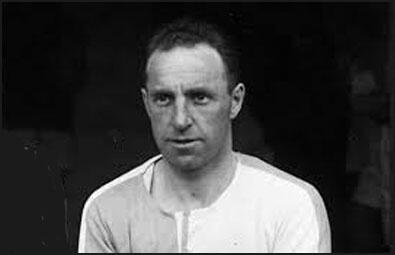
For days after his transfer Puddefoot made his first Blackburn Rovers appearance in a home match against Arsenal. A large crowd of 20,000, of whom "probably half went to observe Puddefoot" watched the new signing score the only goal of the game. (60) According to The Blackburn Times: The side moved with a poise and thrusting power it has not had for long enough… Puddefoot, in his first match in the side, at once established his worth. With a man in the middle who combined raiding power with ability to link up the wings and a capacity to work the ball even on such a surface, the line had a unity which largely transformed it. (61)
Topical Times agreed with this assessment: "Puddefoot certainly has paid half his fee already by securing the victory goal which sent Arsenal back empty-handed. Syd Puddefoot is undoubtedly one of the hardest of centres to combat, in that he has body force and a style and sure touch with his shooting boots that make him a swift-foot – an opportunist some call him, but I would prefer to say that he is like the billiards champion, a a man who takes the simple chances and not afraid of testing a first-time shot." (62)
Blackburn Rovers went on a good FA Cup run beating both Tottenham Hotspur (3-1) and Blackpool (1-0) with Puddefoot scoring in both matches. The Lancashire Evening Post attempted to explain this improvement in form: "The change synchronised with, and to a large degree was the effect of Puddefoot's arrival… if a concrete example of the new leader's influence were required, no better instance could be taken than that afforded by Thursday's Cup tie. A line composed of men who, save for Puddefoot, were incapable of getting goals a month ago was welded into as deadly an attacking force as has been seen at Ewood for years. People are even arguing that if the Rovers had Puddefoot before Christmas the club would have been well to the forefront in the championship fight." (63)
International Career
In 1919 Syd Puddefoot played for England against Scotland in two victory internationals. Puddefoot was selected for the game at Goodison Park and scored England's second goal. The newspapers were full of praise for Puddefoot's performance: The Birkenhead News (reported: "For the result Puddefoot… can claim most credit. The burly youth saved his side by sheer determination and the second and equalising goal was a personal triumph for him." (64) The London Weekly Dispatch commented "The young West Ham centre, when he gained confidence, gave a capital display, shooting with accuracy and judgment." (65)
Puddefoot played in the return match in Glasgow seven days later. This time Puddefoot scored two goals in England's 4-3 victory. The Stratford Express proudly commented "newspaper reports found the critics unanimous in their praise of West Ham's centre forward, some of them, in the most eulogistic terms, foretelling a great future for him... much pride is felt in West Ham by the fact that "Sid" is a local man." (66)
However, because Puddefoot played for West Ham United in the Second Division he was not selected for full internationals. He was also ignored after joining Falkirk in the Scottish league. However, when he proved his ability playing in the First Division for Blackburn Rovers he was selected to represent England against Northern Ireland on 25th October 1925. The 31 year-old was asked to play at inside-right, instead of his normal centre-forward position. (67)
The game ended in a 0-0 draw. Puddefoot had several chances to score but they were all saved by the impressive Elisha Scott. As one newspaper pointed out: "Four or five times Puddefoot shot after much severe tackling and after having made progress over bitterly contested ground. Always Scott was there. He seemed to be unbeatable." (68) Syd Puddefoot told the Reynold's News: "Right through the game it seemed to me that there was only one hope of scoring a goal – to catch Scott with the ball in his hands and carry him into the net by sheer weight… when you run up against a custodian like Scott you immediately come to the conclusion that what is really wanted to make scoring easy is a goal about twice the size." (69)
Syd Puddefoot was also chosen to play for England in the game against Scotland at Old Trafford on 17th April 1926. His former West Ham United team-mate Jimmy Ruffell, also played in this game. Scotland scored an early goal and heavy rain made conditions difficult. Puddefoot claimed that the water-absorbent leather ball was as heavy as two bricks. Puddefoot was knocked out on one occasion when he headed the ball. However, he was allowed to continue after treatment. (70)
According to the Evening Telegraph Puddefoot was the star of the team. "Puddefoot has rarely played better than in this match, and he was the great man in the English attack… The Rover was an unqualified success. His dribbling, swerving, and passing were perfect, while he put in the greatest shot of the match – an effort that deserved a goal." As much as he tried Puddefoot was unable to score an equalizer and he never played for England again. (71)
FA Cup Final
Blackburn Rovers switched Puddefoot to inside-right and brought in Ted Harper to play at centre-forward. In the 1925-1926 season Harper scored 43 goals in 37 league games. As Mike Jackman pointed out: "Even when the team endured lean patches in terms of results, Harper still scored goals with a relentless monotony. He fully exploited the change in the offside rule and was aided by the brilliant inside-forward play of Syd Puddefoot." (72)
The following season Blackburn Rovers struggled against relegation. Even so, Puddefoot and Harper continued to play well together. Harper scored 35 goals in 39 games. Puddefoot scored 14 but also contributed a large number of assists. In the 1927-1928 season, when Harper ceased to be a successful striker, Puddefoot managed 17 league and cup goals for the club. (73)
That year Blackburn Rovers went on a good FA Cup campaign. In the beat first round they beat Newcastle United 4-1 with Puddefoot scoring one of the goals. In the second round they beat Exeter City 3-1 with again Puddefoot scoring one of the goals. This was followed by a 2-1 victory over Port Vale. (74)
In the quarter-finals Blackburn had a home tie against Manchester United. Puddefoot was once again the hero with both goals in the 2-0 victory. The Manchester Guardian reported that for the first goal "Holland's centre was lobbed over head high, Puddefoot made a catapult action from the neck, and Ewood rose in a great roaring, surging mass as though tossed about by some violent subterranean disturbance." (75)
Blackburn Rovers were drawn against Arsenal in the semi-final. The press highlighted the clash between Syd Puddefoot and Charlie Buchan. Puddefoot was 33 and Buchan was 36 and The "two strategic chiefs... who are still sighing for a Cup medal to crown a great career." (76)
Buchan later commented: We should have won for we commanded a large share of the play. But we could not break down a Rovers' defence in which the 14st. right-back, burly Jock Hutton, centre-half Rankin, and international left-half 'Aussie' Campbell were right on top of their form." The game was goalless until five minutes into the second-half when Jack Roscamp scored for Blackburn. It was the only goal of the game and Puddefoot had reached his first cup-final. (77)
Blackburn Rovers played Huddersfield Town at Wembley Stadium on 21st April, 1928. Huddersfield were hot favourites to win the final. Syd Puddefoot told the London Evening News: "I bumped into Roscamp just outside the dressing room, and on talking things over we hit upon a cut-and-dried plan of campaign in the event of certain situations arising. Within the first minute one occurred. I got the ball from Thornwell, and I lifted it up the field over the head of one of the backs for Roscamp... and it went into Mercer's hands." (78)
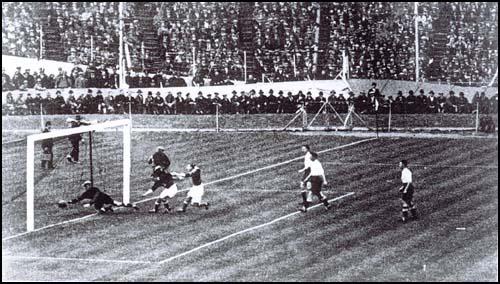
Syd Puddefoot chipped the ball over the head of Ned Barkas. Billy Mercer, the Huddersfield goalkeeper, attempted to catch the ball. Jack Roscamp collided with Mercer and the ball slipped out of his grasp and trickled into the empty net. Tom McLean added a second after 22 minutes. Alex Jackson got one back for Huddersfield but Roscamp scored his second and Blackburn's third in the 85 minute to give the underdogs a well-deserved victory. (79)
On 31st August 1931, Syd Puddefoot married Lilian Frankland, a passionate Blackburn Rovers supporter. He was 37 and she was 22. One newspaper referred to her as the "golden haired girl in the stand", it went on to say that "puddefoot's colleagues attribute his brilliant play this season to his romance", and that when he is playing Miss Frankland attends the match, her golden tresses conspicuous in the grandstand." (80)
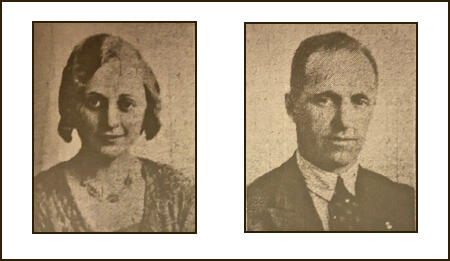
Despite his age Puddefoot continued to play well for Blackburn Rovers. According to the Blackburn Times: "Puddefoot was the master engineer… and his football savoured of genius all through. There was no man on the field who could get as much play on the ball as he; could get as much play on the ball as he; could juggle it past opponents with unorthodox feints and swerves; and deliver such delectable passes to his confreres. He was a host in himself, and pleased friend and foe for his cleverness." (81) The Sheffield Independent added: "Puddefoot still remains the mainspring of the Rovers attack… he is one of the wonders of present-day football, for despite his advancing years, he can still hold his own amongst the younger element in craft and ability." (82)
Return to West Ham
In the 1931-1932 season Puddefoot lost his place in the Blackburn Rovers side. Now aged 38 Puddefoot's football career appeared to be coming to an end. Puddefoot had always wanted to return to his boyhood club, West Ham United. In January 1932 they were in 17th place in the First Division. Syd King, who was sill manager of the club, offered a £1,000 fee for Puddefoot. When the offer was accepted Puddefoot commented: "It will be one of the proudest days of my life when, on Wednesday, I play once more for my old club, West Ham." (83)
Puddefoot told The Stratford Express: "I am, naturally, very glad to play for my old team, especially as West Ham is my home town. It was here that I learnt to play football, and it was here that I started my professional career under the banner of the West Ham club. Nothing will please me more than to give my remaining years as a footballer to my old club, and to finish my career with it." (84) One journalist reported: "No wonder the fatted calf was killed, metaphorically, when the wanderer returned… and no wonder every supporter of West Ham sent his hat into the air – metaphorically – when he heard that the wandering Syd had returned." (85)
Puddefoot played for West Ham United against Manchester City on 2nd March 1932. According to the newspapers Puddefoot had a good game. "Puddefoot played splendidly, passing with fine judgment." "He played good football, making many wise passes, both long and short, at right moments." Puddefoot displayed accuracy in distributing his passes, and maneuvered the ball cleverly." The West Ham attack was much strengthened by the presence of Puddefoot, whose loss of pace is compensated for his fine sense of position and ability to change the point of attack with a swinging pass out to either wing." (86)
However, despite Puddefoot's good performance, the game ended in a 1-1 draw. Puddefoot later told the The Stratford Express: " I have on occasions when visiting the club jokingly hinted that I might some time return, I never really thought that I should again wear the club's colours... I hope that I shall soon settle down in the team, and be able to be of service to the club which gave me my first chance." (87)
Puddefoot was unable to score or improve the results and West Ham who won only one game in its last 13 fixtures. This included ten losses and West Ham finished bottom of the league and was relegated from the First Division. The manager, Syd King, commented: "What can I say? We have had some bad luck in matches and with players. We have played good football, and we have played some that was bad, but in some of the games in which the good football has been played, we have been unluckily beaten. A small incident has turned the scale against us, and the points lost have made all the difference to our position." (88)
Puddefoot was retained for the 1932-1933 season. He started brightly and scored in a 1-1 draw with Notts County. According to The Sunday People newspaper: "It was left to Puddefoot to show the younger brigade the only bright spots in the game. The veteran sent in one or two capital shots that just missed the mark… Puddefoot may be old in years, but he seemed wonderfully young on Saturday. It is no exaggeration to say that it was easily the outstanding player on the field. His positional play was a class above that of most of the rest of the West Ham team." (89)
Although now aged 39, Puddefoot continued to perform well in the Second Division. Charlie Paynter was pleased with Puddefoot's fitness. London Evening News reported: "Occasionally, however, Mr Paynter seems to give away the fact that really at heart he is still a trainer. It was with the genuine pride of a trainer that he pointed to the wonderful physique of Syd Puddlefoot. 'Never in my life have I known a footballer so well preserved', said Mr Paynter. And Puddefoot himself added a word: 'It is 20 years since I played for West Ham the first time', he said, 'but I am exactly the same weight now as I was then.' And surely when he does retire there will be a job in football waiting for him. A player with such experience, with the real football brain, and the secrets of physical fitness, he has all the qualifications for one of football's big posts." (90)
West Ham struggled in the Second Division in the 1932-1933 season and finished 3rd bottom. Puddefoot scored 3 goals in 15 games. However, he had far more success playing for the reserves. In one game against Leicester City he scored a hat-trick. A 19 year-old Ted Fenton was in the team that day: "As a kid I'd heard of Syd beating four or five men in a run, taking the ball up to the goalkeeper, showing it to him and then moving round him with it into the net. Once it was over the line Puddefoot would put his foot on the ball, then bend down and courteously hand it to the 'keeper to punt back to the centre... In one of my early games for the reserves... I saw him perform that feat I'd heard so much about. As he put his foot on the ball in the goal, it was like seeing a dream come true. I stood open-mouthed in the centre of the pitch." (91)
Football Manager
After his retirement Puddefoot was keen to become a coach or a manager. He applied for several jobs in the Football League without success before becoming player-manager at the Turkish club Galatasaray in July 1933. The club had just finished fifth in the league, and their arch-rivals Fenerbahçe had coasted to their seventh title. The club decided they wanted a big-name British footballing personality to lead their revival. (92)
Puddefoot's first task was to get the players as fit as those in the English Football League. He told Charlie Buchan of the London Evening News that "at first made the players feel stiff and sore, but now they are perfectly fit and making rapid progress". (93) They responded well: "The Turks have a natural aptitude for the game; they are of fine physique, most enthusiastic, and take the game very seriously." (94)
Puddefoot was surprised by some aspects of Turkish football. "They have some queer rules of their own. Charging is not allowed, and yet there is any amount of deliberate kicking of one another. The goalkeeper is not permitted to be touched when he has the ball. He may bounce it about up and down, and no-one may go for him… They are inclined to dribble too much; this is, in fact, their weakest point… less individuality and more team is required." (95)
Puddefoot was employed as a player-coach and was in the starting line-up for three pre-season friendly games and in one of these games he scored with "an unstoppable shot". However, now aged 39, in the first game of the season he was on the bench where he stayed for the whole of the season. The team did well and challenged Fenerbahçe for the league title." (96)
Charlie Buchan of the London Evening News reported on Puddefoot success in Turkey: "As there are so few in existence it is very pleasing to record the success of a British coach on the Continent. Yet it is only what I expected from Syd Puddefoot, whose football revealed his intelligence and a wonderful knowledge of the game… since Puddefoot took over the reins of the knowledge of the game… Since Puddefoot took over the reins of the Galatasaray club in Istanbul, Turkey, the team has made tremendous progress." (97)
The most important game of the season was against league leaders Fenerbahçe. on 23rd February 1934. The game was goalless and 20 minutes from the end a fight took place between the players. Puddefoot, who ran on the pitch in an attempt to get his players back in the dressing-room, received an upper cut to the chin from Husamettin Boke, the Fenerbahçe goalkeeper. The police eventually got control and the match was abandoned. The Turkish FA gave a lifetime ban on Boke, banned one player from each side for six months and fourteen others (seven a side) for two months. This enabled Beşiktaş to win the league. (98)
Syd Puddefoot decided he wanted to return to England and declined Galatasaray offer of a three-year extension to his contract. As he told the The Daily Mail: "The players are too excitable. There are always police and an ambulance on the ground. In the middle of a match, supposing the referee gives a penalty or there is some incident, a team will suddenly refuse to play anymore, walk off the ground and go to the dressing room... One can never guarantee that a game will end. Sometimes the referee will get offended and refuse to continue." (99)
Soon after arriving back in England, Lilian Puddefoot gave birth to a baby girl, Susanne. She was destined to be the couple's only child. On 8th March 1935 Puddefoot was appointed manager of Northampton Town in the Third Division. At first it went well and the club's performances improved and were no longer threatened by relegation. According to The Sunday People: "Gates have soared again from a mere handful of spectators to the seven thousand mark. The enigma of it all is that the team is practically unchanged, but there is a new spirit abroad. With pilot Puddefoot at the helm next season, the Cobblers will be an early tip for promotion." (100)
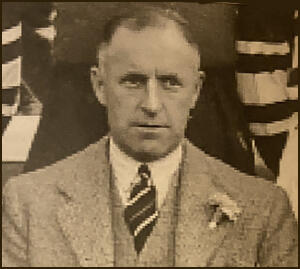
Syd Puddefoot became frustrated by having to sell his best players. Northampton Town was in tenth position, only seven points behind the team at the top of the league, with a game in hand, when he resigned as manager. He later told The Sunday Express: "I went to Northampton as manager. But I wasn't cut out to be a manager. I just couldn't take orders from people who didn't even know how to lace up a ball." (101)
Charlie Buchan, of the London Evening News was more diplomatic about Puddefoot's decision. "It came as a great surprise when Syd Puddefoot resigned from the management of Northampton Town. Since he went there two years ago the team has made big strides… as gates have increased and everything in the garden looks lovely, Puddefoot's resignation is indeed unexpected… When I spoke to Syd recently, he was very keen to put the club into the Second Division. He thought that with the acquisition of another class player he could achieve that object. It meant the expenditure of a good round sum and he was keen on getting his man. Evidently some of the club directors have not agreed with his policy, so Puddefoot has resigned." (102)
Later Life
Puddefoot decided to change his career. He moved to Blackpool and during the Second World War he was employed by the Blackpool Borough Police. After the war he worked as a clerk for the Civil Service at the Ministry of Pensions. His active involvement in football was now limited to coaching his young work colleagues. However, when West Ham United finally made it back to the top flight in 1958 as Second Division Champions he was among the 300 guests at the celebration dinner held at the Cafe Royal in London. (103)
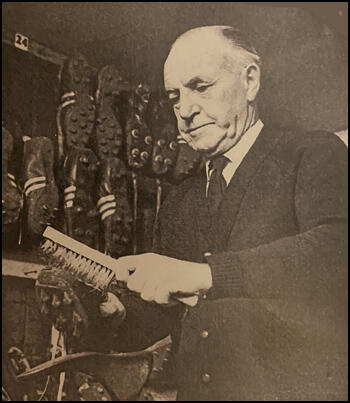
Puddefoot retired to Essex in 1963. The couple lived at 22 Bewley Court, Whittingham Avenue, Southend-on-Sea. After meeting up with his former teammate at West Ham, Ted Fenton, who at the time was manager of Southend United, offered him a part-time job at the club. Ken Lawrence of The Sunday Express visited him in 1964: "I found him cleaning the boots. Though nearing 70, his eyes are still clear and sparkling, his back is still straight. Even so, he is little more than 5'6" tall. But 40 years ago he was 5'6" of dynamite...'It's like starting anew. And it's wonderful,' he told me, as he put the final touch to a pair of boots in his tiny boot-room under the stand at Roots Hill, home of Southend United. Officially, Syd is part-time. But he so enjoys his work – cleaning the boots, looking after the referee on match days, looking after the players' baths and keeping an eye on the ground-staff boys – that you will generally find him at the ground. 'I love it. I am 69, but don't feel it. I feel I want to be out there playing. Sometimes I don't know how I keep off that park,' he smiled." (104)
Sydney Puddefoot died in Rochford Hospital from pneumonia on 2nd October, 1972, a fortnight before his 78th birthday. Lilian Puddefoot died in April 1979, aged 70. Their daughter, Susanne Puddefoot, graduated from Girton College, Cambridge, with a degree in Modern and Medieval Languages. She had a successful career as a journalist and as The Times first-ever Women's Page editor. (105)
Primary Sources
(1) Syd Puddefoot, Topical Times (19 June 1926)
Perhaps mother did not know this, or perhaps she had not heard that sport was one of Mr Beal's strong points. She did not know that Mr Beal was one of the finest sportsmen in the country. He was a grand cricketer, a clever footballer, and a gentleman.... At all events I was no sooner settled down at my new school than Mr Beal found out that I could play football, and I became a member of the team. Mr Beal used to coach us and tell us our faults and show us how to overcome them. And a grand coach he was, too… We had some grand games. I started as an outside left and scored so many goals and I was transferred to the centre forward position. I was a very small boy, as was known as "Titch"...
Before I left school, I knew that some day I'd be given the opportunity to play for West Ham United FC. I was a member of Park School team, and during my schooldays I played many games on West Ham's ground. Mr Syd King, manager of the club, evidently thought I develop, because he sought me out one day and asked me if I would play for them when I had finished my school days. I replied that I would be only too pleased to do so. Play for West Ham? At that time that was my greatest ambition. However, I didn't say so to the club officials, and they kept an eye on me all the time I played with juniors.
(2) Philip Stevens, The Pioneers of West Ham United: 1895-1960 (2012)
Puddy's goalscoring feats were becoming the stuff of legend. A photograph of Syd scoring one of his five goals against Chesterfield is a graphic illustration of the qualities of the player. The Hammers centre-forward is pictured rising high above the Chesterfield centre-half and goalkeeper, who despite their best efforts to knock him off the ball, fail to prevent Puddy from crashing a bullet header high into the net, much to the delight of the fans on the North Bank.
Puddy had made his mark at West Ham and established a growing reputation in the Southern League. In just over two seasons his physical courage, skill and goalscoring feats endeared the local boy to all Hammers fans. Syd King saw his young local hero as the heart of a West Ham side capable of promotion to the Football League.
(3) Syd Puddefoot, Topical Times (3 July 1926)
I received a huge surprise. Mr Nicol of the Falkirk club called on me at my home while I was having lunch.
"Hello, what are you doing here?" I asked, when I had recovered from the initial surprise on seeing him.
I've come down for you", he said.
"Well, West Ham want a big fee for me," I told him, and I didn't for a moment believe that Falkirk would pay the fee required. If Falkirk pay that fee and can arrange matters with West Ham, will you sign for us?" asked Mr Nicol, and when I replied that I would we both walked back to the West Ham United ground to see the officials....
He (King) was delightfully frank as he balanced himself on his chair which was an extension telephone. "Well, what are you prepared to offer for Puddefoot?" the West Ham manager asked. A Falkirk director spoke, and as he did so Syd King toppled over backwards and struck his head on the extension telephone – the director had said "£5,000".
To the day of his untimely death, Syd King carried a small scar as a result of that fall backwards when he received what he described as his greatest shock. I hummed and hawed a bit," he once told me. "They got "Puddy", West Ham got £5,000, and I got a nasty cut and the honour of being the only English manager ever to have sold a Scottish club a player at such a price."
(4) West Ham United football programme for the match against Hull City (11th February, 1922)
The departure of Syd Puddefoot came as no surprise to those intimately connected with him. It is an old saying that everyone has one chance in life to improve themselves and Syd Puddefoot is doing the right thing for himself in studying his future. We understand that he will be branching out in commercial circles in Falkirk and when his football days are over he will be assured of a nice little competency.
(5) Reynold's News (12 February 1922)
Puddefoot's transfer was the great topic of the waiting crowd, and the noisiest of the home supporters resented the transfer strongly. They showed their resentment by giving the visitors a far heartier reception than they gave the home team, and Hull City had the unusual experience of playing on an away ground at which most of the spectators appeared to be hoping earnestly to see them win.
(6) Topical Times (18 February 1922)
I am glad of the opportunity of playing again in Scotland because in my humble opinion footer as played north of the Tweed is far superior to that which passes for the game South. The game south is fast becoming more or less of a rough and tumble. Rush tactics seem to be the order of the day, and far more attention is given to the ball. It is not the game that was played, say, even ten years ago. In all this run-and-rush the scientific, clever, subtle play is lost… in the North the play is of a much slower type. The hard-headed Scot pays to see football played and demands that it shall be played in the full sense of the word. Therefore, each man has an opportunity to use his skill to the best advantage.
(6) Blackburn Times (3 October 1930)
Puddefoot was the master engineer… and his football savoured of genius all through. There was no man on the field who could get as much play on the ball as he; could get as much play on the ball as he; could juggle it past opponents with unorthodox feints and swerves; and deliver such delectable passes to his confreres. He was a host in himself, and pleased friend and foe for his cleverness.
(7) Mike Jackman, Blackburn Rovers (2006)
Although aged 30, Puddefoot, who had previously played with West Ham United, was the type of gifted playmaker that the club desperately needed, and following his arrival there was an immediate upturn in results... Puddefoot remained one of the most gifted footballers of his era. His vision and passing ability made him the supreme play-maker, the man who made the bullets for others to fire.
(8) Syd Puddefoot, The Stratford Express (5 March 1932)
I am, naturally, very glad to play for my old team, especially as West Ham is my home town. It was here that I learnt to play football, and it was here that I started my professional career under the banner of the West Ham club. Nothing will please me more than to give my remaining years as a footballer to my old club, and to finish my career with it...
I have on occasions when visiting the club jokingly hinted that I might some time return, I never really thought that I should again wear the club's colours... I hope that I shall soon settle down in the team, and be able to be of service to the club which gave me my first chance.
(9) Charlie Buchan, London Evening News (12 March 1937)
It came as a great surprise when Syd Puddefoot resigned from the management of Northampton Town. Since he went there two years ago the team has made big strides… as gates have increased and everything in the garden looks lovely, Puddefoot's resignation is indeed unexpected… When I spoke to Syd recently, he was very keen to put the club into the Second Division. He thought that with the acquisition of another class player he could achieve that object. It meant the expenditure of a good round sum and he was keen on getting his man. Evidently some of the club directors have not agreed with his policy, so Puddefoot has resigned.
(10) Ken Lawrence, The Sunday Express (19 January 1964)
I found him cleaning the boots. Though nearing 70, his eyes are still clear and sparkling, his back is still straight. Even so, he is little more than 5'6" tall. But 40 years ago he was 5'6" of dynamite.
A Soccer Colossus… a goalmaker and a goalscorer… one of the greatest footballers in the land. His name? Syd Puddefoot…
"It's like starting anew. And it's wonderful," he told me, as he put the final touch to a pair of boots in his tiny boot-room under the stand at Roots Hill, home of Southend United.
Officially, Syd is part-time. But he so enjoys his work – cleaning the boots, looking after the referee on match days, looking after the players' baths and keeping an eye on the ground-staff boys – that you will generally find him at the ground. "I love it. I am 69, but don't feel it. I feel I want to be out there playing. Sometimes I don't know how I keep off that park," he smiled.
Student Activities
References
(1) Peter Morris, Puddy: The Life and Times of Syd Puddefoot (2026) pages 27
(2) Philip Stevens, The Pioneers of West Ham United: 1895-1960 (2012) page 58
(3) Emily K Abel, Canon Barnett and the first thirty years of Toynbee Hall (1969) page 18
(4) Asa Briggs, Toynbee Hall: The First Hundred Years (1984) page 19
(5) Samuel Augustus Barnett and Henrietta Barnett, Towards Social Reform (1909) page 285
(6) Peter Morris, Puddy: The Life and Times of Syd Puddefoot (2026) page 33
(7) Syd Puddefoot, Topical Times (19 June 1926)
(8) Philip Stevens, The Pioneers of West Ham United: 1895-1960 (2012) page 12
(9) East Ham Echo (23 April 1898)
(10) Peter Morris, Puddy: The Life and Times of Syd Puddefoot (2025) pages 30
(11) Kirk Blows and Tony Hogg, The Essential History of West Ham United (2000) page 36
(12) Peter Morris, Puddy: The Life and Times of Syd Puddefoot (2026) page 38
(13) John Moynihan, The West Ham Story (1984) page 23
(14) Syd Puddefoot, Topical Times (19 June 1926)
(15) Reg Groves, Official History of West Ham United (1947) page 12
(16) Kirk Blows and Tony Hogg, The Essential History of West Ham United (2000) page 240
(17) Syd Puddefoot, Topical Times (19 June 1926)
(18) East Ham Echo ( 26 December 1913)
(19) The Athletic News (5 January 1914)
(20) The Daily Mail (12 January 1914)
(21) Philip Stevens, The Pioneers of West Ham United: 1895-1960 (2012) page 57
(22) Kirk Blows and Tony Hogg, The Essential History of West Ham United (2000) page 241
(23) Philip Stevens, The Pioneers of West Ham United: 1895-1960 (2012) page 57
(24) John Northcutt and Steve Marsh, West Ham United: The Complete Record (2015) page 85
(25) Peter Morris, Puddy: The Life and Times of Syd Puddefoot (2026) page 73
(26) John Northcutt and Steve Marsh, West Ham United: The Complete Record (2015) page 89
(27) Brian Belton, War Hammers (2007) page 120
(28) Syd Puddefoot, Topical Times (26 June 1926)
(29) Peter Morris, Puddy: The Life and Times of Syd Puddefoot (2026) page 83
(30) Kirk Blows and Tony Hogg, The Essential History of West Ham United (2000) page 243
(31) The Athletic News (5 January 1920)
(32) West Ham United v Blackpool football programme (30 October 1920)
(33) London Daily News (15 November 1920)
(34) John Northcutt and Steve Marsh, West Ham United: The Complete Record (2015) pages 104-105
(35) All Sports Weekly (4 December 1920)
(36) Peter Morris, Puddy: The Life and Times of Syd Puddefoot (2026) page 83
(37) London Daily News (4 February 1922)
(38) The Daily Express (6 February 1922)
(39) Syd Puddefoot, Topical Times (3 July 1926)
(40) Peter Morris, Puddy: The Life and Times of Syd Puddefoot (2026) pages 18-19
(41) Topical Times (18 February 1922)
(42) Syd Puddefoot, Topical Times (3 July 1926)
(43) Brian Belton, War Hammers (2007) page 121
(44) Peter Morris, Puddy: The Life and Times of Syd Puddefoot (2026) page 16
(45) The Daily Express (12 February 1922)
(46) West Ham United v Hull City football programme(11th February, 1922)
(47) Reynold's News (12 February 1922)
(48) Peter Morris, Puddy: The Life and Times of Syd Puddefoot (2026) page 15
(49) Kirk Blows and Tony Hogg, The Essential History of West Ham United (2000) page 245
(50) Sydney Horer, London Daily News (24 February 1922)
(51) Topical Times (18 February 1922)
(52) Peter Morris, Puddy: The Life and Times of Syd Puddefoot (2026) page 146
(53) The Falkirk Mail (4 March 1922)
(54) Peter Morris, Puddy: The Life and Times of Syd Puddefoot (2026) page 150
(55) The Falkirk Mail (26 August 1922)
(56) The Falkirk Mail (16 September 1922)
(57) Peter Morris, Puddy: The Life and Times of Syd Puddefoot (2026) pages 170-171
(58) Syd Puddefoot, Topical Times (24 July 1926)
(59) Mike Jackman, Blackburn Rovers (2006) page 64
(60) Peter Morris, Puddy: The Life and Times of Syd Puddefoot (2026) page 221
(61) The Blackburn Times (7 February 1925)
(62) Topical Times (14 February 1925)
(63) The Lancashire Evening Post (1 March 1925)
(64) The Birkenhead News (30 April 1919)
(65) The London Weekly Dispatch (27 April 1919)
(66) The Stratford Express (8 March 1919)
(67) Peter Morris, Puddy: The Life and Times of Syd Puddefoot (2026) pages 278-279
(68) The Athletic News (26 October 1925)
(69) Syd Puddefoot, Reynold's News (1 November 1925)
(70) Peter Morris, Puddy: The Life and Times of Syd Puddefoot (2026) pages 280-281
(71) The Evening Telegraph (24 April 1926)
(72) Mike Jackman, Blackburn Rovers (2006) page 65
(73) Mike Jackman, The Essential History of Blackburn Rovers (2001) pages 226-228
(74) Mike Jackman, Blackburn Rovers (2006) pages 67-68
(75) The Manchester Guardian (5 March 1928)
(76) Peter Morris, Puddy: The Life and Times of Syd Puddefoot (2026) page 240
(77) Charlie Buchan, A Lifetime in Football (1955) page 111
(78) Syd Puddefoot, London Evening News (23rd April, 1928)
(79) Mike Jackman, Blackburn Rovers (2006) pages 69-70
(80) Peter Morris, Puddy: The Life and Times of Syd Puddefoot (2026) pages 263-264
(81) Blackburn Times (3 October 1930)
(82) Sheffield Independent (11 November 1930)
(83) Blackburn Times (5 March 1932)
(84) The Stratford Express (5 March 1932)
(85) The Magnet (9 April 1932)
(86) Peter Morris, Puddy: The Life and Times of Syd Puddefoot (2026) page 286
(87) Syd Puddefoot, The Stratford Express (5 March 1932)
(88) Syd King, The Stratford Express (11 May 1932)
(89) The Sunday People (4 September 1932)
(90) London Evening News (21 January 1933)
(91) Ted Fenton, Home With the Hammers (1960) page 34
(92) Peter Morris, Puddy: The Life and Times of Syd Puddefoot (2026) pages 304-305
(93) Syd Puddefoot, interviewed by Charlie Buchan of the London Evening News (13 October 1933)
(94) Syd Puddefoot, The Daily Mail (7 December 1933)
(95) Syd Puddefoot, The Daily Mail (15 December 1933)
(96) Peter Morris, Puddy: The Life and Times of Syd Puddefoot (2026) pages 304-305
(97) Charlie Buchan, London Evening News (16 February 1934)
(98) Peter Morris, Puddy: The Life and Times of Syd Puddefoot (2026) page 308
(99) Syd Puddefoot, The Daily Mail (15 December 1933)
(100) The Sunday People (5 May 1935)
(101) Syd Puddefoot, The Sunday Express (19 January 1964)
(102) Charlie Buchan, London Evening News (12 March 1937)
(103) Peter Morris, Puddy: The Life and Times of Syd Puddefoot (2026) page 327
(104) Peter Morris, Puddy: The Life and Times of Syd Puddefoot (2026) page 329
xxxx