

James Lardner
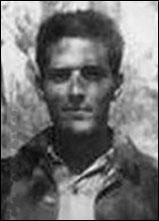
James Lardner, the son of Ring Lardner and Ellis Lardner, and the brother of Ring Lardner Jr., John Lardner, and David Lardner, was born on May 18, 1914 in Chicago, Illinois. (1)
Ring Lardner was a successful journalist. Andrew Ferguson has argued that "Ring Lardner thought of himself as primarily a sports columnist whose stuff wasn't destined to last, and he held to that absurd belief even after his first masterpiece, You Know Me Al, was published in 1916 and earned the awed appreciation of Virginia Woolf, among other very serious, unfunny people." Ferguson believed You Know Me Al was one of the top five pieces of American humor writing. (2)
James Lardner studied at Harvard University but left without a degree in order to become a foreign correspondent for the New York Herald Tribune in Paris. He was described as being "lanky, dressed in clothes that always seemed too big for him". (3)
Lardner was like his brother Ring Lardner, he was a passionate anti-fascist who had favourable feelings towards communism. He told Ellis Lardner "I believe that fascism is wrong and must be exterminated, and that liberal democracy or more probably communism is right." (4)
Lardner managed to persuade his newspaper to send him to report on the Spanish Civil War. March 1938 Lardner traveled to Barcelona in the company of fellow journalists Ernest Hemingway and Vincent Sheean to observe the conflict first hand. He toured the Ebro front and interviewed General Enrique Lister of the Republican Army. (5)
A few weeks later Lardner declared that he was going to join the International Brigades and fight for the Republic, Sheean tried to talk him out of it arguing that enlistment at such a late stage in a war that they clearly were going to lose was useless: "You can't get a story there. The only story you could get would be to get killed, and that'll do you good. I write that." (6)
Lardner drew up a list of sixteen reasons he wanted to enlist, including his hatred of fascism and because "I think it will be good for my soul." Lardner then sent the list to his mother about why he wanted to fight for the Republicans. "I have made a list of reasons why I am enlisting in the International Brigade, which is fairly accurate, as I did it for my own information. I am copying it here so that you may see for yourself which are the real ones. Some of them are picayune and most of them would have been insufficient in themselves, but all have something to do with it. (i) Because I believe that fascism is wrong and must be exterminated, and that liberal democracy or more probably communism is right. (ii) Because my joining the I.B. might have an effect on the amendment of the neutrality act in the United States. (iii) Because after the war is over, I shall be a more effective anti-fascist." (7)
General Francisco Franco moved his troops towards Valencia with the objective of encircling Madrid and the central front. Juan Negrin, in an attempt to relieve the pressure on the Spanish capital, ordered an attack across the fast-flowing Ebro. General Juan Modesto, a member of the Communist Party (PCE), was placed in charge of the offensive. Over 80,000 Republican troops, including the 15th International Brigade and the British Battalion, began crossing the river in boats on 25th July. The men then moved forward towards Corbera and Gandesa. (8)
After joining the International Brigades Lardner moved to the front line and by July he had been made a corporal and began reporting on the war in the Volunteer for Liberty: "The functions of a Cabo (corporal) is to see that his men execute quickly and efficiently the order of his superior officers. To this end he must have, first, an extensive knowledge of military technique; secondly; the respect of his squad; third, a sense of discipline, and fourth, a willingness to work and study hard. Without mastering the performance of every task, whether it be cleaning a Dekatriev digging a fox-hole or cutting barbed wire, the Cabo cannot take every precaution for his men's safety nor utilize fully their fighting strength. Without the respect of his men he cannot lead them either at the front or in reserve. Without a foundation of discipline he cannot rely on the swift fulfilment of every order when seconds count under fire. Without hard work he cannot attain any of the qualifications of a good Cabo." (9)
As Cecil D. Eby, the author of Comrades and Commissars: The Lincoln Battalion in the Spanish Civil War (2007), has pointed out: "For a time he was an odd fish: he did not swear, he blanched at obscene marching songs, he kept his nose in a book, and he lacked the common touch. Another intellectual, John Murra, a Romanian American, took him aside and gave him a crash course in proletarian mores. Soon Lardner was singing with the others, and the men realized his shyness was not snobbery." (10)
The New York Times reported that on 19 July, 1938, James Lardner had been wounded in the back by shrapnel and had been sent back to Ebro for treatment. (11) According to Lardner he had been put in charge of an escort of prisoners from the lines to Mora. They were all going along the road peaceably when he saw some edible-looking apples in a tree near by. He called a halt while he climbed the tree to get as many apples as he could. While he was in the tree a detachment of Fascist aviation flew over, bombing the road. One of their fifty-kilogram bombs exploded in the field, and some of the flying shrapnel caught him in the leg. He was sent to hospital to the newspaper. (12)
Lardner returned to the front-line on 6 September. Alvah Bessie, a journalist working for Volunteer for Liberty, requested that Lardner be sent to Barcelona to work on the newspaper. Commissar George Watt turned the idea down, "I don't think he's a very good writer yet. He's learning things now that will mature him." If he lives," said Bessie. According to Bessie's book, Men in Battle (1939), Watt laughed when he made this comment. (13)
On 22 September 1938, Lardner with two other men in his command were sent out to patrol a hill to the rear of his battalion. They encountered heavy enemy fire and Lardner did not return to camp. (14) The following day the International Brigades were withdrawn from the front-line. (15)
The International Brigades left Barcelona on 29th October 1938. Dolores Ibárruri, made a farewell speech. "Comrades of the International Brigades! Political reasons, reasons of state, the good of that same cause for which you offered your blood with limitless generosity, send some of you back to your countries and some to forced exile. You can go with pride. You are history. You are legend. You are the heroic example of the solidarity and the universality of democracy. We will not forget you; and, when the olive tree of peace puts forth its leaves, entwined with the laurels of the Spanish Republic's victory, come back! Come back to us and here you will find a homeland." (16)
James Lardner's death was confirmed several weeks later when a Nationalist correspondent reported that a body with foreign press credentials had been found in the location where Lardner was last seen. His body, which was discovered in fascist-controlled territory, was never recovered. According to Vincent Sheean, "Lardner, the last American to enlist, had been the last to be killed." (17)
Primary Sources
(1) Deborah Cohen, Last Call at the Hotel Imperial: The Reporters Who Took on a World at War (2022) page 278
In March 1938, Jimmy Sheenan boarded the evening train from Paris to Perpignan, on the Spanish frontier. He and Hemingway were travelling together. The third man in their party was Jim Lardner, the son of the late satirist and journalist, Ring Lardner. Lanky, dressed in clothes that always seemed too big for him, and horn-rimmed spectacles, Jim was a twenty-three-year-old Harvard dropout and a zealous believer in the Republican cause. He'd been reporting for the Herald Tribune in Paris and was off to Spain, not knowing that Jimmy, too, had been dispatched by the same paper to cover the fighting.
(2) James Lardner, letter to Ellis Lardner (3 May 1938)
This is a letter which I started to write on April 10. At that time I thought I was going to have to break the news to you gently, but you seem to have heard it before I had the chance. I have kept putting off writing you because each day it seemed as if on the next I would know what I was going to do and where I would be stationed…
This is a most exclusive army. It has taken me twelve days of going from person to person and officer to get where I am. I have listened to advice of all varieties, a large part of it against my enlisting at all. The decision has been very much my own, and I took it after a great deal of consideration. My closest friend and principal adviser here has been Vincent (Jimmy) Sheen, who told me not to join, which shows you have stubborn I am, if you didn't know. Ernest Hemingway's advice was that it was a very fine thing if I wanted to fight against fascism, but that it was a personal matter that could only be decided by me….
I have made a list of reasons why I am enlisting in the International Brigade, which is fairly accurate, as I did it for my own information. I am copying it here so that you may see for yourself which are the real ones. Some of them are picayune and most of them would have been insufficient in themselves, but all have something to do with it.
(1) Because I believe that fascism is wrong and must be exterminated, and that liberal democracy or more probably communism is right.
(2) Because my joining the I.B. might have an effect on the amendment of the neutrality act in the United States.
(3) Because after the war is over, I shall be a more effective anti-fascist.
(4) Because in my ambitious quest for knowledge in all fields, I cannot afford in this age to overlook war.
(5) Because I shall come into contact with a lot of communists, who are very good company and from whom I expect to learn things.
(6) Because I am mentally lazy and should like to do some physical work for a change.
(7) Because I need something remarkable in my background to make up for my unfortunate self-consciousness in social relations.
(8) Because I am tired of working for the Herald Tribune in particular and newspapers in general.
(9) Because I think it will be good for my soul.
(10) Because there is a girl in Paris who will have to learn that my presence is not necessary to her existence.
(11) Because I want to impress various people, Bill for one.
(12) Because I have to find material for some writing, probably a play.
(13) Because I want to improve my Spanish as well as my French.
(14) Because I want to know what it is like to be afraid of something, and I want to see how other people react to danger.
(15) Because there may be a chance to do some reading and I won't have to wear a necktie.
(16) Because I should like once more to get in good physical condition.
The first four reasons and the ninth, especially the first, are the most important one in my opinion, but you may decide for yourself. If you still consider me one of your sons, you can send me an occasional letter and possibly a package now and then… Anything edible would be appreciated, milk chocolate or raisins, or anything in cans that does not require preparation.
(3) Vincent Sheean, Not Peace but a Sword (1939)
The offensive across the Ebro was well planned and organized. A bridge was flung across the river at Mora during the night (a ready-made bridge in pieces, like the Meccano toys children play with) and the 5th Army swarmed across before the Fascists had any idea of what was happening. The other side of the river was not held in force: the main strength of the Fascist army, its Moors, Navarrese and Italians, had been pounding away to the south for some weeks in an attempt to reach Valencia. The Republican force reached the neighborhood of Gandesa before it could be stopped. There, on the hills that they had been unable to hold last spring, the Republicans dug themselves in and stuck. The whole Fascist army turned to dislodge them, and the Italian and German aviation was increased to numbers hitherto unknown, but they stayed where they were. The action was, so to speak, a "defensive offensive," since its main object was to turn the Fascist attack away from Valencia. In this it succeeded, the push to the south was stopped altogether, and the new front took up all the time, money and effectives of the Fascist junta until the end of the autumn.
Jim seems to have deserved the good opinion of his company during the big drive; it was at this time, after the first week or so of action, that he became a corporal. In August he was wounded and sent back of the Ebro for treatment. The way of it, according to his own account in a letter to Walter Kerr, was this: he had been put in charge of an escort of prisoners from the lines to Mora. They were all going along the road peaceably when Jim saw some edible-looking apples in a tree near by. He called a halt while he climbed the tree to get as many apples as he could. While he was in the tree a detachment of Fascist aviation flew over, bombing the road. One of their fifty- kilogram bombs exploded in the field, and some of the flying shrapnel caught Jim in the thighs. He came down the tree with wounds which ought to have kept him out of action for the rest of the offensive.
It was here, again, that his stubbornness showed itself stronger than ever. He was clamoring to go back to the front after the first few days in hospital. His wounds justified keeping him back, and he was in fact kept back for about thirty days a time which seemed to him much too long. In a letter he wrote to me on his last day in the hospital he complained of this excessive solicitude with his usual mixture of good humor and acrimony. I think he probably suspected what was true: that his brigade officers and the medical aid people, like the I.B. authorities in Barcelona five months before, were trying to keep him from the zone of danger as long as possible. His bad eyesight alone would have made them anxious to keep him from the front lines; but by this time they all knew the story of his enlistment how he had come along after no more enlistments were accepted, and got himself into the battalion by sheer stubborn insistence and they had a somewhat protective attitude toward the last of the internationals. These considerations were, of course, superimposed upon the basic one which was Jim's fortune or misfortune, luck or jinx, from the beginning that he was a son of Ring Lardner. Ring Lardner was a writer who still held a very special place in the affections of most Americans, and nobody wanted to see his son take more than the necessary risks. Jim probably suspected (or knew) all this without being told, and set his mind upon getting back to the front in spite of them. He had a few days' leave in Barcelona in September, his wounds healed, and the brigade command had no further excuse for keeping him out of the lines; he went back just as the tide was turning strong and the Fascists were pushing the Republican army with all their immensely superior resources. It was also just before the International Brigades were withdrawn from the fronts and mustered to be sent home.
I was in Prague then, and although the thought of Spain was insistent was almost a necessity of life in the psycho- logical horror of those weeks, actual news from Spain was scarce. I heard nothing about Lardner until I got back to Paris again in mid-October. My plan was to spend only a few days in Paris and then return to Spain, not for press material or any professional purpose, but for the private aim of reassuring myself as to the existence of men who still had their self-respect. During those few days in Paris I heard, first, that Lardner had been killed on the Ebro; second, that he had been captured by Moors and then murdered; third, that he had been wounded and captured by Fascist troops and was now in a Fascist prison camp. There seemed no very dependable way of selecting which one of these stories to believe. The American Embassy at Saint-Jean-de-Luz had done its best, by means of its acquaintances in Fascist Spain, to check over the lists of prisoners held in the various camps, and had not been able to find Lardner among them. The death or capture was supposed to have taken place about three weeks before, and the embassy people were beginning to think it improbable that Lardner was still alive.
I did not know (and do not yet know) how efficient the Fascist system of identification of prisoners might be. It was possible that Lardner might remain for months in a prison camp without being listed at the Fascist headquarters. On the other hand, I knew he had kept his passport; he also had letters and other means of identification; American prisoners were not so numerous that these would fail to catch the attention of the Fascists, however elastic their system with captured "Reds." If they had not shot him out of hand, as was their custom in many cases (especially among the Moors and Navarrese), there was a good chance that the senoritos of Burgos would preserve his life as a demonstration of their civilized status.
The best way to inquire was in Spain. I took the eight-fifteen to Perpignan again some days later, and drove from Barcelona one day with Herbert Matthews to the encampment of the 15th Brigade (that is, of the Americans, British and Canadians who were in it) at Ripoll in upper Catalonia. The International Brigades had all been withdrawn from the front lines by September 26, in accordance with the promise given by the Prime Minister, Dr Negrin, at Geneva on September 23. A League of Nations Commission was now in Barcelona superintending the demobilization and repatriation of these units. The English-speaking battalions had been quartered at Ripoll, the French, Belgians, Czechs and Germans in other places far behind the lines where they had done so well. Their units the 35th and 45th divisions of the 5th Army Corps; the 15th Brigade, containing the English-speaking battalions, had been in the 35th Division were now being filled up with Spaniards, but the old names were to remain: the Lincoln Battalion, for instance, would carry that name so long as it existed, although there were no Americans left in it. Only one day before my arrival in Barcelona the city had said its farewell to the brigades in the most moving ceremony of the war. The internationals had paraded through streets hung with flags and paved with flowers; the girls of Barcelona had broken their lines repeatedly to kiss them; the Spanish units in the parade had marched in full war kit, the internationals unarmed as they [264] had come to Spain. Nothing had been lacking: cheers, tears, speeches; even Azafia, the President of the Republic, had taken his place in the reviewing stand to say farewell to the men who had, a year or two before, saved his government. (It was his last public appearance as President, I believe.) The boys had then gone back to their camps and were waiting to be counted by the League of Nations Commission so that they could go home.
(4) James Lardner, Volunteer for Liberty (19 July, 1938)
The functions of a Cabo is to see that his men execute quickly and efficiently the order of his superior officers.
To this end he must have, first, an extensive knowledge of military technique; secondly; the respect of his squad; third, a sense of discipline, and fourth, a willingness to work and study hard.
Without mastering the performance of every task, whether it be cleaning a Dekatriev digging a fox-hole or cutting barbed wire, the Cabo cannot take every precaution for his men's safety nor utilize fully their fighting strength.
Without the respect of his men he cannot lead them either at the front or in reserve. Without a foundation of discipline he cannot rely on the swift fulfilment of every order when seconds count under fire. Without hard work he cannot attain any of the qualifications of a good Cabo.
The Cabo must also prepare himself to take over the command of his peloton in the event that his sergeant should be hit. He must similarly train the men in his squad so that they may be ready to fill his shoes.
In all this the Cabo does the work of an activist. But to merit the name he must also do more. He must instill in his men an understanding of the cause for which they are fighting. He must work for better relations between Internationals and Spaniards, between Catalan and Castilian, between soldiers and civilian. He should make himself a guardian of the crops and other property of the civil population.
The Cabo must maintain the fighting spirit of his men at a high level and bolster their courage in action by reminding them of what a Fascist victory would mean to Spain and to the world.
(5) New York Times (29 September 1938)
James P. Lardner, 24-year-old son of the late Ring Lardner, was disclosed today to have been captured by Spanish Insurgents during the night of September 22 in the last action of the International Brigade fighting with the Spanish Government forces.
Visitors to the London Lincoln-Washington Battalion of American now are back to the east of the Euro River awaiting evacuation from Spain, said Mr Lardner was the last man lost by the unit.
Mr Lardner joined the International Brigade last April after entering Spain as a reporter for the Paris edition of the New York Herald Tribune. He was wounded July 27 in the government's Ebo River drive near Granesa. Following his recovery, he returned to the front lines on September 6.
(6) Charles Poore, New York Times (July 28, 1939)
The best chapter in the book (Not Peace But a Sword) is the one called "The Last Volunteer," a moving account of how Jim Lardner, son of Ring Lardner (and far from a fighting man), followed his deepest convictions by joining the Abraham Lincoln Battalion in the last days of its service, and his death somewhere in Spain. Reading this chapter is a little like looking at one of Max Beerbohm's cartoons of The Old Self and The Young Self. It is almost as though one were seeing the Sheean who was writing "Not Peace But a Sword" facing the young Sheean who had written "Personal History." It was interesting to see, in a recent announcement, that the son of Will Rogers was raising funds for a memorial to the son of Ring Lardner.
(7) R.l. Duffus, New York Times (July 30, 1939)
The author of "Personal History" has chosen for his subject the progress of fascism during what may turn out to have been the most fateful year in modern times - from March, 1938, to March, 1939. There is little that is personal, except as Mr. Sheean, naturally enough, finds it difficult to tell what he saw without also telling how he felt. His emotions, however, are always under control. He has achieved a mastery that makes literature of the horror and indignation which swept over him with much of what he saw, the admiration for human courage that some other spectacles inspired in him. Yet a reader may suspect that this book is as good as it is - and as a document it stands above "Personal History" because Mr. Sheean wrote it in a peculiarly selfless mood, distrusting words as a substitute for action. He had seen 23-year-old Jim Lardner give up the trade of words to force his way, against everybody's will but his own, into the International Brigade - the last volunteer and the last member of the Lincoln Battalion to fall. In the last months of the Spanish Republic he had seen a group of speechmaking intellectuals quieted by the greater eloquence of a chauffeur who "suggested that we stand in silence for a few seconds and think of those who had died in the defense of Madrid." A writer who has had experiences like that will at least be careful of his words, and Mr. Sheean is careful. He writes with restraint, if also with an inevitable undercurrent of bitterness. To him the year's story is that of the struggle between fascism and that - by whatever name it is called - which is opposed to fascism. He saw the Nazis at work in Austria and marching into Czechoslovakia. He went near enough to the Ebro fighting to be in danger from Franco planes and Franco artillery. No doubt there will be some readers who will heartily share his emotions in Austria and CzechoSlovakia and not share them so fully, or at all, in Spain. For the benefit of the latter the best a reviewer can do is to point out that Mr. Sheean is not a Communist, though he is willing to give credit to what he considers the organizing genius of the Communists in Spain; that he does not believe the International Brigade or very many Spaniards fought for communism during the recent war; and that he is quite willing to admit that outrages were committed by Anarchists within the Republican lines during the initial period of disorder which followed the outbreak of 1936. His view of the Spanish war as an episode in the fascist campaign in Europe is still further sustained by the proud admissions in Rome and Berlin, since the surrender of Madrid, that Italian and German fighters and materials had an important share in the Franco victory. A reviewer, however, need not argue Mr. Sheean's case for him. What should be made clear is that he finds a tragic unity in the year's events - unity in the aggressions committed by dictatorial end essentially pagan States, unity, also, unhappily, in what Mr. Sheean regards as the "weakness and perfidy" of the non-fascist communities. An observer who was in Prague when the German planes were expected at any hour, and who lived through the days when the Czechs were encouraged by their supposed allies to mobilize and were then told that if they fought they would not be supported, may be pardoned some disillusionment. If the same observer talked with the ragged remnants of the International Brigade after they had been cut off in the Ebro fighting and had broken through to temporary safety, it is at least humanly understandable that he should think less of certain aged statesmen and more of dead and crippled young men - "for provinces and nations can be signed away, but youth and honor never."
Student Activities
Child Labour Simulation (Teacher Notes)
Road Transport and the Industrial Revolution (Answer Commentary)
Richard Arkwright and the Factory System (Answer Commentary)
Robert Owen and New Lanark (Answer Commentary)
James Watt and Steam Power (Answer Commentary)
The Domestic System (Answer Commentary)
References
(1) Ring Lardner Jr., The Lardners: My Family Remembered (1976) page 189
(2) Andrew Ferguson, Wall Street Journal (2 December, 2006)
(3) Deborah Cohen, Last Call at the Hotel Imperial: The Reporters Who Took on a World at War (2022) page 278
(4) James Lardner, letter to Ellis Lardner (3 May 1938)
(5) Cecil D. Eby, Comrades and Commissars: The Lincoln Battalion in the Spanish Civil War (2007) page 359
(6) Vincent Sheean, Not Peace But A Sword (1939) page 238
(7) James Lardner, letter to Ellis Lardner (3 May 1938)
(8) Paul Preston, The Spanish Civil War (1986) page 154
(9) James Lardner, Volunteer for Liberty (19 July, 1938)
(10) Cecil D. Eby, Comrades and Commissars: The Lincoln Battalion in the Spanish Civil War (2007) page 361
(11) New York Times (29 September 1938)
(12) Vincent Sheean, Not Peace but a Sword (1939) page 262
(13) Alvah Bessie, Men in Battle (1939) page 406
(14) Cecil D. Eby, Comrades and Commissars: The Lincoln Battalion in the Spanish Civil War (2007) page 361
(15) New York Times (29 September 1938)
(16) Dolores Ibárruri, speech in Barcelona (29th October 1938)
(17) Vincent Sheean, Not Peace but a Sword (1939) page 263